
The Level of Addiction Care Most People Don’t Understand (But Need)
“Rehab helps individuals… supporting them to return to drug- and alcohol-free, healthy, productive lives.”
In 2022, nearly 108,000 people died in the United States from drug-involved overdoses (about 296 people a day). If you are considering Addiction Treatment IOP in RI, an intensive outpatient program can offer structured care several days a week while you still live at home, often around 9–20 hours of therapy and support across the week.
Keep reading to learn what IOP includes, who it helps most, and how to start with a clear, confident plan.
What Addiction Treatment IOP In RI Means And Where It Fits In The Level-Of-Care Spectrum
An IOP is structured outpatient care for people who do not need medical detox or 24-hour supervision. Research describes substance use IOPs as services for people with substance use disorders (and sometimes co-occurring mental health needs) who do not require detoxification or constant monitoring.
Many people use IOP as a step-down after inpatient or residential treatment, or as a step-up from weekly counseling. It is part of a full care pathway, so you can move to more or less support as your needs change.
Level Of Care | Where You Live | Typical Time Commitment | Best For |
Standard Outpatient | At Home | Fewer weekly hours | Stable recovery support |
IOP | At Home | More structured weekly hours | More support without 24/7 care |
PHP | At Home | More hours than IOP | High structure without overnight stay |
Inpatient/Residential | On Site | 24/7 | High-risk or unstable situations |
How Many Hours Per Week An Addiction IOP Usually Requires
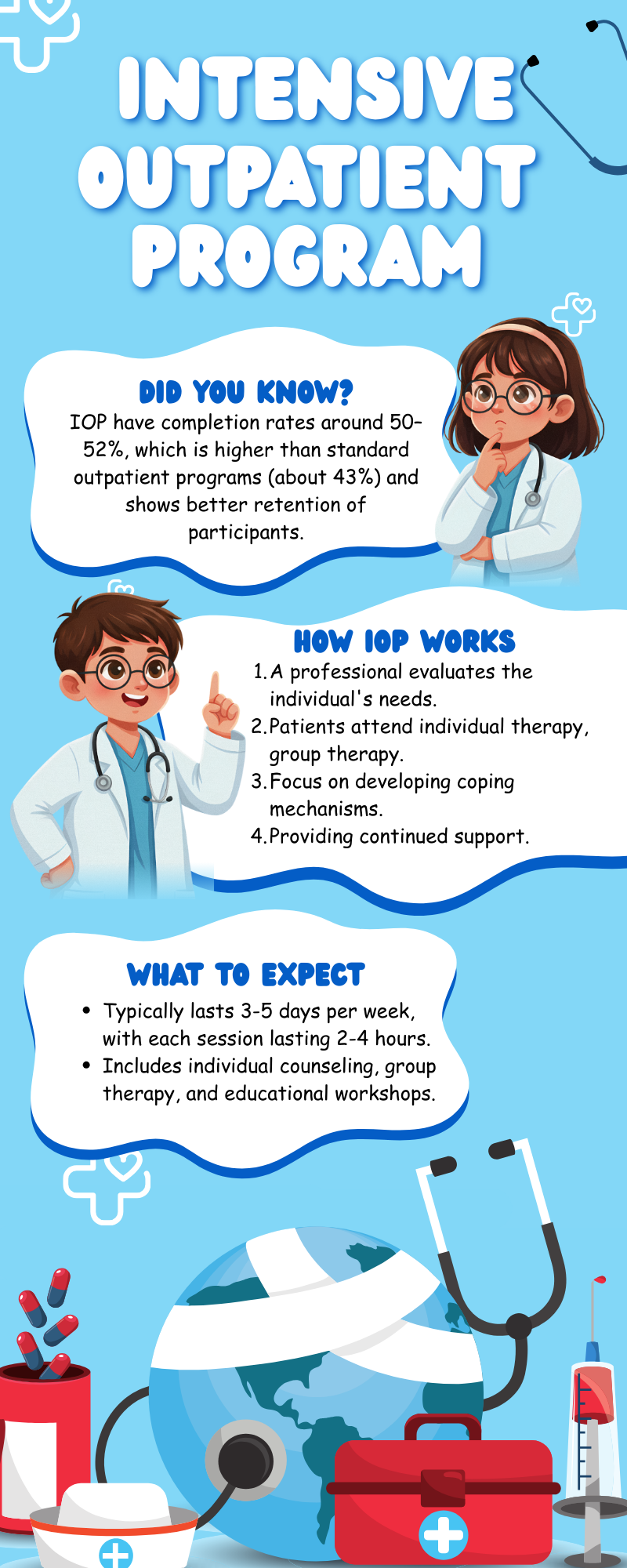
Many programs follow standards that describe Level 2.1 IOP as at least 9 hours per week of skilled treatment services. One service-characteristics guide based on ASAM criteria states that Level 2.1 includes a minimum of 9 hours per week.
In real life, that often looks like three sessions per week, with each session lasting about three hours. Over time, hours may taper as you build stability and meet treatment goals.
Why Many People In Rhode Island Choose IOP Instead Of Inpatient Rehab
IOP can work well when you need strong structure but want to keep work, school, or parenting routines. It also lets you practice Relapse Prevention in real situations between sessions, instead of waiting until discharge.
For many people, IOP is also a helpful bridge after detox or residential treatment. You get professional support while you rebuild daily life, one week at a time.
Who Is A Good Fit For An Addiction IOP In Rhode Island (And Who May Need A Higher Level)
IOP is often a good fit when you have stable housing, and you can attend sessions consistently. It can also be a strong choice when withdrawal risk is low, and you do not need 24-hour medical monitoring.
At the same time, IOP is not meant to replace detox or inpatient care when safety is a concern. If your situation is more severe, we can help guide you to the right starting point through a careful assessment.
Practical Signs IOP Is The Right Level Today
You may be ready for an Intensive Outpatient Program if weekly therapy has not been enough. It can also fit well if you recently completed detox or residential care and want continued structure.
Other common signs include strong cravings, repeated relapse, or stress and anxiety that make it hard to stay steady alone. If you want accountability and support while living at home, IOP can be a practical next step.
When To Consider Detox, Residential, Or Partial Hospitalization Instead
You may need a higher level of care if withdrawal could be dangerous, your mental health is unstable, or you cannot stay safe between sessions. You may also need more support if your living environment makes recovery difficult.
When in doubt, choose safety first and get a clinical evaluation. A good plan matches the level of care to your real-world risks and needs, not just your schedule.
Types Of Addiction Treated In An IOP In RI
Addiction IOPs commonly support alcohol and drug recovery, and they may also support people with Dual Diagnosis needs. Research notes that IOPs can serve people with substance use disorders and co-occurring mental and substance use disorders.
Your care plan should match your substance use pattern, mental health needs, and daily responsibilities. That is why we treat this list as examples, not a one-size-fits-all promise.
Alcohol Addiction IOP In RI
Alcohol-focused IOP often emphasizes Relapse Prevention planning and coping tools for stress, conflict, and social pressure. It can also support people after detox or after returning to drinking.
Group-based support can be especially helpful early in recovery. You learn from others, and you also see that you are not alone in the process.
Opioid Addiction IOP In RI (Including Medication-Supported Recovery)
Many programs coordinate counseling with Medication Management when it is clinically appropriate. Medicare guidance for IOP services describes a program that can include individual and group therapy, and it may include medication management as part of care.
In our work, we focus on a complete plan that supports cravings, routines, and long-term stability. We also help you understand options and make decisions with professional guidance.
Stimulant, Cannabis, And Polysubstance Recovery Through IOP
IOP can help with cravings, sleep disruption, and the daily habits that keep addiction going. It can also help you rebuild structure, such as morning routines, work boundaries, and healthier coping choices.
Because polysubstance use can be complex, planning matters even more. We tailor goals to what you are using, when you are at risk, and what support you have at home.
What Happens Inside An Addiction Treatment IOP (The Therapies And Supports That Matter)
IOP usually includes structured treatment in multiple formats, and it often relies heavily on Group Therapy.
ChoosingTherapy describes intensive outpatient therapy as often including group treatment as a core feature, along with other coordinated services depending on the program.
Many programs also add individual counseling, family sessions, and psychiatric care when needed. The goal is to support real behavior change, not just education.
Group Therapy As The Foundation Of IOP
Group therapy often focuses on changing addictive patterns, improving emotional regulation, and strengthening relationships.
In intensive outpatient settings it often addresses self-defeating or addictive behaviors and builds coping skills.
You also gain shared accountability in a well-run group. Over time, the group becomes a place to practice honesty, build skills, and stay connected.
Individual Counseling And Family Involvement
Many IOPs include individual counseling and may include family counseling. ChoosingTherapy lists individual and/or family counseling as services that many intensive outpatient therapy programs may include.
Family involvement can reduce conflict and improve support at home. It also helps loved ones understand recovery as a process, not a single decision.
Psychiatric Care And Medication Management When Needed
Some people need support for depression, anxiety, trauma symptoms, or cravings that interfere with progress. For this purpose, psychiatric care and medication supervision are included as part of intensive outpatient therapy programs.
When medication is part of the plan, monitoring matters. We focus on safety, coordination, and clear follow-up so you do not feel left alone between visits.
Skills Training Topics That Help People Stay Steady Between Sessions
Strong IOP care teaches practical skills, not only ideas. Many intensive outpatient programs include skills-building and relapse prevention supports as part of the overall approach.
At our center, we often focus on sleep planning, coping ahead for weekends, refusal skills, urge surfing, and building a sober social calendar. We also help you write a simple “first slip” response plan so one mistake does not turn into a full relapse.
How Long Addiction IOP Takes In RI (And What Affects Duration)
Length varies based on your needs, progress, and insurance authorization. A commonly recommended duration is around 90 days; however, the treatment length can fluctuate widely.
Weekly hours can also vary, and many programs deliver a structured weekly schedule across several days. Intensive outpatient therapy is often designed to provide about 9 to 20 hours of therapy spread across the week.
What A Realistic Weekly Schedule Can Look Like For Working Adults
A realistic schedule often includes three evening sessions each week plus one individual session. This approach supports steady progress without pulling you fully away from daily responsibilities.
As you stabilize, intensity may taper and shift toward aftercare planning. The goal is to help you transition to the next level smoothly, not to keep you in the same phase forever.
How Effective Addiction IOP Can Be (What Research Suggests)
A major review found strong evidence for substance use IOPs, including reduced alcohol and drug use from baseline to follow-up. That same review also found a few differences between IOPs and inpatient programs for many outcomes.
Even so, results depend on matching the right level of care to the right person. If someone has a very severe impairment, they may do better starting with inpatient stabilization before stepping down.
For a broader look at flexible care options, read our latest blog, “Outpatient Mental Health Treatment In Rhode Island,” and see how it connects with the support discussed above.
Why Continuity Of Care And Step-Down Planning Improve Results
IOP works best when you attend consistently and stay engaged. Research highlights IOP as part of a continuum, so step-down planning and follow-up support matter for long-term outcomes.
This is why we plan for what comes next early. We help you build routines, support connections, and a realistic aftercare schedule while you are still in treatment.
Insurance Coverage And Affordability For Addiction Treatment IOP In RI
Coverage depends on your plan, medical necessity, and network status. Medicare describes IOP services as a structured program that can include therapy services and may include medication management under certain rules.
Some standards define IOP with a minimum weekly hour threshold. ASAM-based service descriptions for Level 2.1 note at least 9 hours per week of skilled treatment services.
What To Ask Your Insurance Company Before Starting
Asking clear questions can prevent surprises later. Here are helpful questions to ask about Insurance Coverage and program access:
- Is this program in-network?
- Do I need prior authorization?
- What is my copay or coinsurance?
- How many hours per week are covered?
- Is Medication Management covered?
- Are drug screens covered?
- How many days are approved at a time?
Typical Self-Pay Cost Range (And Why It Varies)
Costs vary based on services, intensity, and location. One-day fees can range approximately between $250 and $350, depending on the facility.
Even when you plan to self-pay, you can ask for a written estimate. You can also ask what is included, such as groups, individual sessions, testing, or psychiatric visits.
Case Study
After completing inpatient alcohol detox, a 36-year-old father enrolled in Addiction Treatment IOP in RI to rebuild routines without leaving home. He attended four evening groups each week, completed weekly alcohol testing, and met monthly with a prescriber for medication support.
In group, he practiced craving-management skills, planned sober weekends, and learned to handle conflict without drinking. He also joined two family sessions to improve communication and set clear boundaries.
By week twelve, he reported steady sleep, fewer triggers, and consistent meeting attendance, then stepped down to weekly outpatient therapy and ongoing peer support to keep recovery strong after IOP.
Getting Started With Addiction Treatment IOP In RI At Rhode Island Addiction Treatment Centers
Recovery is not only about stopping. It is about building a life you can keep. An IOP can give you structure, skills, and support while you still live at home. It can also help you stay steady after detox or inpatient care.
Progress happens one week at a time. What would feel better right now: guessing your next step, or having a clear plan?
If you are ready to explore Addiction Treatment IOP in RI, call Rhode Island Addiction Treatment Centers today at 888-902-3422.
We will listen, answer questions, and guide you.