
Aftercare and Alumni Support: Maintaining Lifelong Sobriety in Westerly, RI
Recovering from addiction is a significant accomplishment, but the journey doesn’t stop once treatment is over. Returning to life’s routines can bring challenges.
Pressure from work, family, financial issues, and social environments can lead to cravings.
Aftercare provides continued guidance and support to help people manage these changes.
Alumni programs, recovery groups, counselling, and activities for sober people can also provide a sense of connection.
In Westerly, RI, connecting with people can help make long-term recovery easier.
Why Aftercare Matters After Addiction Treatment
Aftercare is provided after the first treatment program. It helps people in using recovery skills in an unstructured treatment setting.
The move can be challenging.
People can go back to places of substance abuse. They may also be feeling lonely, have issues with relationships, or feel pressure to go back to old behaviors.
A continuing care plan may include:
- Individual therapy/counselling.
- Alumni meetings and Peer recovery support.
- Relapse prevention planning.
- Medication management (when clinically appropriate).
- Education for the family and recovery.
- Sober living homes as required.
The aim is to keep going and to tackle new challenges.
Each person should have their own aftercare schedule that reflects their individual needs.
What the Research Says About Long-Term Recovery Support
According to research, continued care is crucial following addiction treatment.
In 2025, a review was published that looked at recovery support services for individuals who had alcohol or drug use disorders.
It showed that peer-delivered support was related to reduced relapse and readmission rates, increased treatment engagement, and increased social support.
The literature review also shows that half and two-thirds of individuals with severe substance use disorders will relapse in the first year of treatment.
This is a reminder that support is needed and recovery is not a linear process.
But the overdose data from Rhode Island also illustrate the importance of ongoing efforts to support communities.
In 2025, the state had 219 accidental overdoses compared to 329 in 2024. Opioids, however, were responsible for 73% of those deaths, and 57% were due to fentanyl.
These are the general public health figures. They also underscore the need to engage people in treatment, recovery services, and support.
Alumni Programs Support Lifelong Sobriety
Alumni programs are groups of individuals who have finished treatment but attended the same program and connect with others who share the same recovery experience.
They help people in sustaining connections with their treatment system post-treatment.
The alumni support can include one or more of the following:
- Group meetings and recovery check-ins on a regular basis.
- Group support and learning from each other.
- Social events and activities without alcohol.
- Coping/relapse prevention workshops.
- Counseling and/or other services referrals.
Such connections can help to alleviate feelings of isolation.
It may also be helpful for individuals to hear from others who have struggled with similar issues.
Alumni support is not to be confused with professional treatment.
If you notice the person having an increase in cravings, mental health symptoms, or using again, they might need more clinical treatment.
Building a Strong Support Network in Westerly, RI
A healing environment can help make every day easier to recover.
Westerly residents can discover community and enjoy safe areas in which to spend their leisure time.
In the vicinity of downtown Westerly, Wilcox Park provides an area of green space for walking and quiet reflection.
Community activities are available in the nearby area of Westerly Library and Wilcox Park, too.
If you like to spend time outdoors, you can find some fresh air and exercise at Misquamicut State Beach or Watch Hill.
These are not treatment sites but may serve as structures that create opportunities for healthy activity and further limit the time in substance use environments.
Another way people can explore is local recovery meetings, peer support services, and counseling.
A strong support system can consist of close family, friends, sponsors, therapists, and others in recovery.
Managing Triggers and Preventing Relapse
Recovering can be more difficult when you are under stress.
Cravings can be triggered by family conflict, financial issues, loneliness, social events, or other factors.
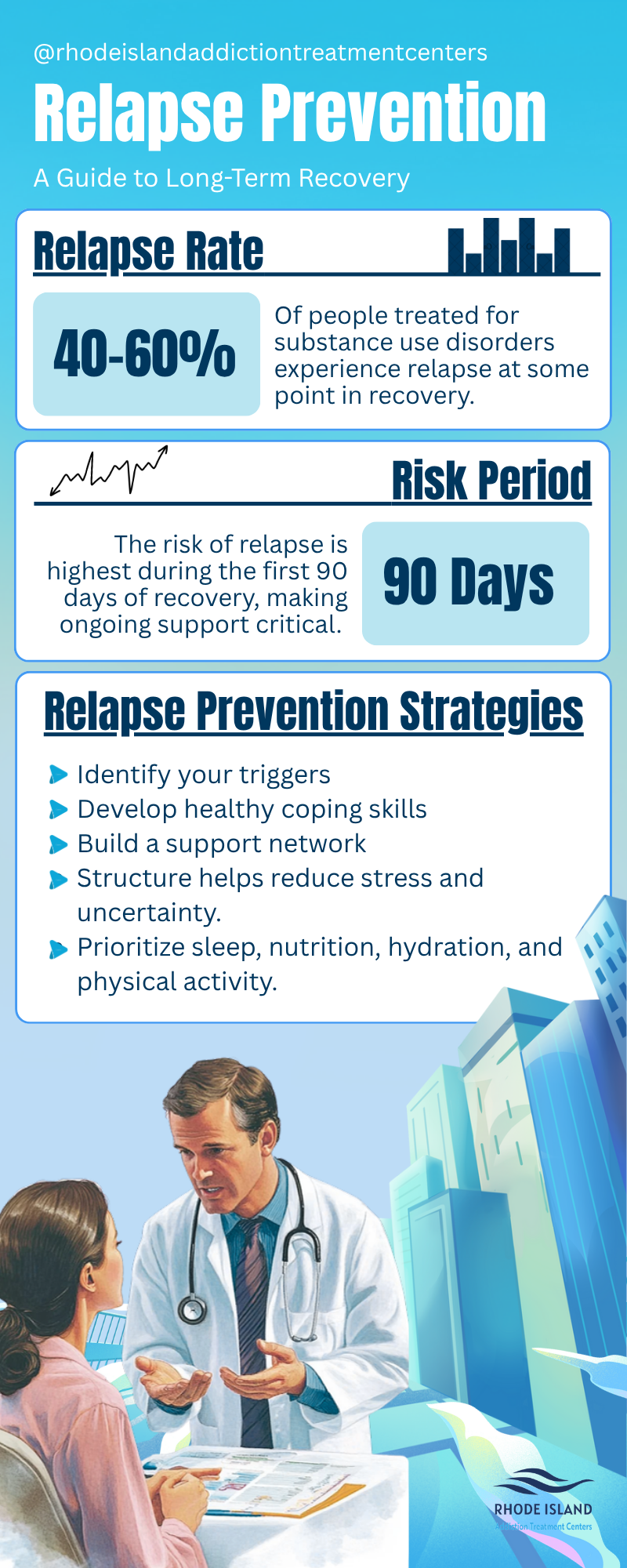
A relapse prevention plan is a strategy that supports an individual in recognizing signs or symptoms that might signal a relapse before they get out of hand.
It should help identify personal triggers, coping strategies, and individuals to reach out to during challenging moments.
Helpful strategies include:
- Sticking to a sleep and feeding routine.
- Going to scheduled counselling/recovery meetings.
- Avoiding high-risk environments as much as possible.
- Healthy coping and stress management techniques.
- Maintaining the connections to trusted support persons.
A relapse does not mean that nothing has been achieved.
It’s an opportunity to re-engage with professional assistance as well as to revisit the recovery plan.
The sooner help is provided, the less damage will be caused.
Supporting Mental Health without the Drugs
The recovery process can be affected long after initial treatment for mental health issues. Cravings or emotional distress can be caused by anxiety, depression, trauma, and sleep issues.
Continued counseling can assist individuals to identify these and to learn how to respond in healthier ways.
For instance, CBT can assist people to recognize negative thinking patterns and alter behaviours associated with the use of substances.
Medication might also be considered for some mental health, drug, and alcohol issues.
Symptoms can be evaluated by a trained health care provider who can discuss appropriate options.
If relationships are safe and supportive, family involvement can be a source of encouragement as well.
Friends and family can benefit from learning about addiction and the ways they can help a person in recovery without enabling addiction.
Finding Continued Recovery Support in Rhode Island
Aftercare should not be a last resort.
It is a vital element of ongoing progress and addressing challenges in the long term.
Westerly and local residents have access to counseling, peer recovery groups, alumni services, and other continuing care services as well.
The appropriate combination depends on an individual’s clinical needs and circumstances.
Readers are encouraged to explore information about addiction treatment and potential avenues for recovery with Rhode Island Addiction Treatment Centers.
Make a Step Forward in Lasting Recovery
It takes more than a treatment program to achieve long-term sobriety.
It needs ongoing encouragement, healthy habits, and help when problems occur.
People can stay connected with aftercare and alumni programs when going through the day-to-day.
People can keep working towards a healthier life in Westerly and in Rhode Island with consistent support and an individualized recovery plan.
Read Next: Detox vs. Inpatient vs. IOP: Choosing the Right Level of Care in Rhode Island