
Detox vs. Inpatient vs. IOP: Choosing the Right Level of Care in Rhode Island
When there are multiple treatment options to consider, picking an addiction treatment can seem overwhelming.
While some may withdraw from drugs under a doctor’s supervision, others require inpatient care.
Some are seen as outpatients or receive residential care.
The best option will depend on the risk of withdrawal, physical condition, mental health, and the environment someone lives in.
Knowing the difference between detox, inpatient treatment, and intensive outpatient treatment (IOP) can help ease the decision-making process.
Understanding the Addiction Treatment Options
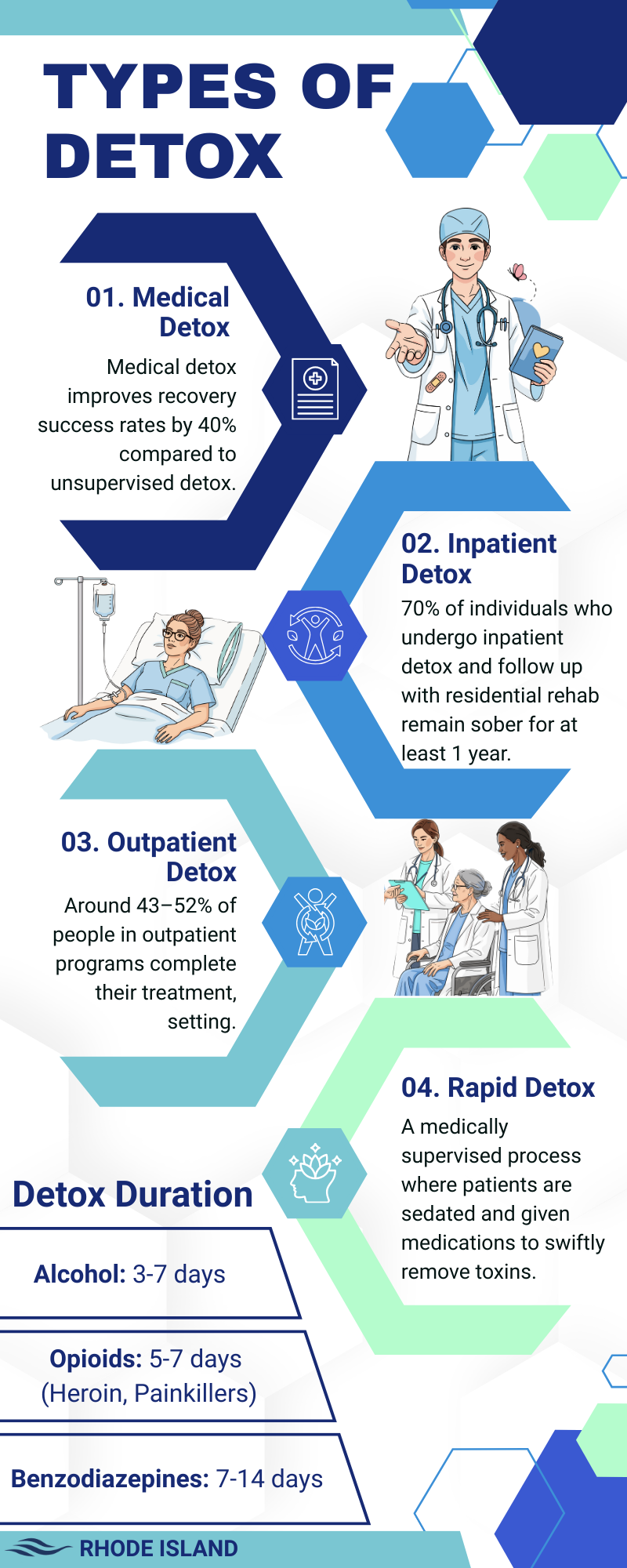
Medical Detox: Medical Management of Withdrawal
Medical detox supports someone in transitioning through withdrawal when they are reducing or stopping drinking alcohol or drugs. Symptoms are monitored, and medical assistance is given where required.
This could involve medication, fluids, and frequent monitoring. Symptoms include anxiety, sweating, nausea, insomnia, and shaking.
Alcohol and benzodiazepine withdrawal, however, can prove to be life-threatening.
If seizures or other serious complications occur, the condition needs immediate medical attention.
Individuals who may have withdrawal symptoms should consult a health care provider before trying to quit.
Detox will relieve the physical dangers but will not treat all aspects of addiction.
Long-term therapy supports identifying triggers, provides coping strategies, and supports minimisation of relapse risk.
The National Institute on Alcohol Abuse and Alcoholism (NIAAA) states that detoxification is not the treatment for alcohol use disorder (AUD).
Inpatient and Residential Treatment: 24/7 Support
Hospital (inpatient) treatment is intensive medical and/or psychiatric care in a hospital setting.
Maybe needed for extreme withdrawal, severe health issues or acute mental health problems.
Residential treatment means staying at a treatment program and engaging in a formal treatment and recovery program.
It can be helpful for individuals who:
- Experience repeated relapses.
- Require a stable and structured setting.
- Struggle to avoid exposure to substances.
- Need regular help with mental health issues that may arise.
Residential care allows you time to focus on recovery in the absence of everyday pressures.
But hospital inpatient treatment is NOT the same as residential treatment. A clinical evaluation is used to decide on the setting.
Intensive Outpatient Programs (IOP): Treatment with More Flexibility
An intensive outpatient program is a treatment that requires a certain amount of structure, but does not require the person to live at a facility.
Participants go to sessions and come home afterwards.
IOP can be appropriate for individuals who have a secure place to live and do not need 24-hour care.
It can also help with the transition from residential treatment.
Services can consist of individual counseling, group therapy, relapse prevention, and mental health services.
This flexibility will help participants to keep some work, education, and family responsibility.
But IOP may not be the right fit for those who have severe withdrawal symptoms or live in unsafe environments.
What the Statistics Show About Addiction in Rhode Island
Although there have been improvements, Rhode Island continues to have significant substance-related issues.
In 2025, the state saw 219 accidental overdoses, which is down from 329 in 2024, according to the Rhode Island Governor’s Office. This was a drop of 33.4%.
According to the CDC, there were a total of 79,384 drug overdose deaths in the country in 2024. The age-adjusted death rate declined from 31.3 per 100,000 people in 2023 to 23.1 in 2024.
As shown in these figures, prompt assessment and appropriate treatment are crucial.
But a statistical definition of overdose is not enough to diagnose the care needed.
How to Choose the Right Level of Care
A professional assessment will help identify the best and safest treatment setting.
The following are signs of withdrawal and relapse risks:
- Those who may have a large withdrawal problem may require medically supervised withdrawal.
- Frequent relapses, high cravings, and persistent drug use despite having serious consequences may mean a more structured treatment is needed.
- Mentally, a person should be well, and their surroundings should be as comfortable as possible.
- Anxiety, depression, and trauma can all make it more difficult to overcome addiction.
- Mental health issues need to be dealt with when dealing with substance use.
- The family home environment is also important.
- Having a stable living environment and supportive family members can help to manage outpatient care.
- Residential treatment may be a better option if the child is exposed to substance use, conflict, or unsafe environments.
Treatment placement is based on clinical criteria for the American Society of Addiction Medicine (ASAM). These take into account the dangers of withdrawal, the physical condition, psychological well-being, and the recovery setting.
Why Treatment Should Continue After Detox
Detox is a brief step in the recovery process from addiction.
Ongoing support and attention to the triggers of substance use are necessary for long-term recovery.
Opioid medications like buprenorphine, methadone, and naltrexone may be significant treatment options for individuals with OUD.
CDC states that detox without continuous medication treatment is not recommended since it could increase the risk of overdose.
Continued care may be residential treatment, IOP, counseling, medication management, or recovery groups depending on individual needs.
Finding Addiction Treatment Support in Rhode Island
Treatment options may vary depending on the individual and could be different for everyone in Rhode Island, including people in Providence, Warwick, Cranston, and Newport.
Others might want to go to an outpatient service that can fit in with their schedules, while others may prefer a more structured setting.
A trained provider can assist in explaining the options available and the necessary assessment and next steps.
Make the Next Step to Recovery
Detox is used to manage withdrawal, inpatient treatment is for intensive care, and IOP is structured care that is more flexible.
The best choice is based on medical needs, history of substance abuse, mental health, and support available.
To learn more about addiction treatment and to take a step towards recovery, visit Rhode Island Addiction Treatment Centers.