
Medication Management
If you have co‑occurring disorders such as anxiety, depression, or trauma, a PHP program for addiction can include medication management. A psychiatrist or nurse practitioner checks in regularly, adjusts doses, and talks through side effects or concerns.
This kind of support helps you stabilize your mood and sleep so you can focus more clearly on your recovery plan. It is one part of a structured treatment plan, not a shortcut or a replacement for therapy.
Is PHP Right For You? (Criteria for Success)
Not every person will benefit from the same level of intensity. Some need more, some need less. A good PHP for addiction is designed for people who meet certain basic conditions.
Who PHP Fits Best
A PHP often works well for people who:
- Are medically stable and beyond the acute withdrawal phase.
- Have a relatively safe home environment where they can practice recovery.
- Are stepping down from residential or inpatient treatment.
- Need more than standard outpatient care but do not require 24‑hour supervision.
If you are in an active crisis, have significant medical risks, or live in a very unstable environment, a higher level of care may be a better first step.
When To Consider Something Else
For some adults, even a PHP is too much or too little. If your life is very busy, or you cannot commit to several hours every day, an IOP for addiction may be more realistic. On the other hand, if your addiction is severe and your safety is at risk, short‑term inpatient care followed by a PHP might be the right path.
Discussing your situation with a licensed clinician can help you decide whether PHP for addiction is the right fit for your timeline and lifestyle.
PHP Vs. IOP: Which One Should You Choose?
Both PHP and IOP offer structured treatment, but they differ in intensity, time commitment, and level of support. Understanding those differences can help you choose the program that matches your needs.
Key Differences At A Glance
|
Factor |
PHP Program |
IOP Program |
|
Intensity |
20–30 hours/week |
9–15 hours/week |
|
Daily Time |
4–6 hours |
2–4 hours |
|
Flexibility |
More structured daytime hours |
More flexible for work/school |
|
Typical Cost |
Higher |
Lower |
 If you found the structure of a PHP helpful and want to see how a step down to ongoing support works, read our latest blog: “What Happens In An IOP Program For Addiction?” to understand how intensive outpatient care can continue your recovery journey.
Case Study
A PHP gives you more clinical time each day, while an IOP gives you more time back in your normal routine. If you are unsure which one fits you best, ask your clinician to walk you through your risk of relapse, support system, and daily responsibilities.
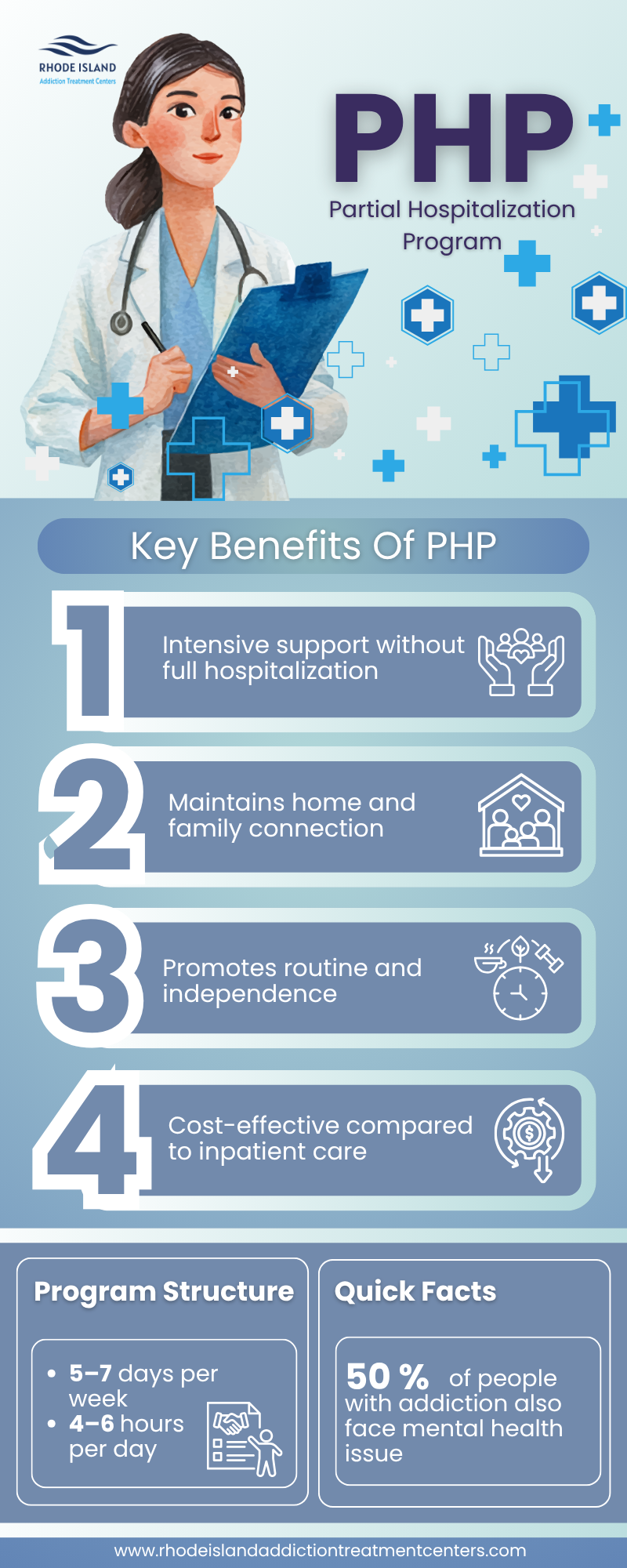
In a recent U.S. case series, an adult in their late 30s with a long history of opioid and alcohol use entered a partial hospitalization program (PHP) after a hospitalization for overdose‑related complications. The program, based in a Midwest behavioral‑health hospital, required five days per week for about 6 hours each day and lasted roughly 4 weeks.
During the day, the participant received individual therapy, group counseling, DBT‑based coping‑skills training, and medication‑assisted treatment (MAT) for opioid use disorder. Each evening, they returned home, applied the same skills in real‑time, and tracked triggers with a counselor.
By the end of the program, the person reported fewer cravings, better mood regulation, and no overdoses in the following 6 months. This case lined up with broader outcomes from that center, where PHP programs consistently reduced emergency‑department visits and supported smoother transitions to outpatient care.
Why This Case Matters
This example shows how a PHP program for addiction can work for someone who is medically stable but still at high risk. The structure keeps you engaged during the day, while the home setting forces you to practice recovery where it really counts. In many ways, that blend of intensive therapy and real‑world application is what makes PHP such a strong bridge between crisis and long‑term recovery.
Benefits Of A PHP Program For Addiction
Choosing a PHP for addiction can change how you experience recovery. It is not a permanent change to your life, but it is a powerful step in the right direction.
- Structured daily therapy creates a steady rhythm that helps you build new habits.
- Holistic support, such as mindfulness, art, or movement, strengthens your mental and emotional health.
- Relapse prevention and coping‑skills training prepare you for real‑world triggers.
- Support for co‑occurring disorders helps you treat both addiction and mental health issues at the same time.
These benefits add up over time, making it easier to stay sober when life gets stressful.
How Rhode Island Addiction Treatment Centers Deliver PHP
In Rhode Island, many addiction centers use PHP programs to help adults move from crisis to stability without losing their independence. The goal is not to keep you in treatment forever, but to prepare you for the next step.
Personalized Treatment Plans
Each client in a Rhode Island PHP program usually receives a customized plan. This can include which therapies you attend, how often you meet with a counselor, and what kind of case management you need.
The plan is not carved in stone. Therapists adjust it based on your progress, your triggers, and your personal goals.
Flexible Timing
Most programs offer daytime and evening sessions so you can choose a time that fits your work and family life. Some people attend in the morning, work part‑time, and rest in the evening. Others choose evening groups so they can keep their full‑time job.
Focus On Sustainable Recovery
The real goal of a PHP program for addiction is not just to get you through a few weeks. It is to help you build a plan for long‑term recovery.
That often means moving into an IOP or outpatient program later, staying connected to support groups, and learning how to manage stress without substances.
How To Decide If PHP Is Right For You
Deciding on a PHP for addiction is not something you have to do alone. It helps to look at three main areas:
- Addiction severity – How strong are your cravings, and how often do you use?
- Co‑occurring mental health issues – Do you struggle with anxiety, depression, trauma, or other conditions?
- Home and work responsibilities – Can you commit to 20–30 hours of structured care each week without losing your job or your safety?
If you are unsure, a professional assessment can help you weigh the options. A clinician can also talk to your insurance provider about coverage for PHP and what your plan expects.
Conclusion
A PHP program for addiction is not a magic fix, but it can be a powerful step toward lasting sobriety. It gives you intensive therapy, emotional support, and structure, while still letting you live at home and keep your life moving.
If you are ready to take the next step, Rhode Island addiction treatment center can help you decide whether PHP, IOP, or outpatient care is the right fit. You can reach out for a confidential assessment and see what kind of support is available.
If you are wondering, “What happens in a PHP program for addiction?” and whether it fits your life, the next step is to talk with a clinician who knows your story.
Call Today At 888.541.4028 to schedule a confidential assessment and see how a PHP program for addiction can support your recovery journey.
FAQs
Does Insurance Cover PHP?
Most major insurers, including Blue Cross and Medicare, cover PHP programs for addiction when they are medically necessary. It is always best to check with your specific plan and ask your treatment center to help verify benefits.
Can I Work During PHP?
Many PHPs are daytime programs, which can be a full‑time commitment for several weeks. However, some centers offer evening or flexible scheduling so you can work part‑time or attend sessions around your shift.
How Long Does PHP Last?
Most programs last about 2–6 weeks, depending on your progress and how stable your life feels. Your team will review your situation regularly and adjust your plan as needed.
Is PHP Better Than Inpatient?
Neither is automatically better. Inpatient care is essential for people in crisis or those who need medical detox. PHP is often best for people who are medically stable but still need strong daily support.
What If I Have Co‑Occurring Disorders?
Most PHP programs for addiction include support for co‑occurring mental health conditions. This means you can treat both your addiction and your anxiety, depression, or trauma in one integrated plan.