
Inpatient Rehab Explained: Who It’s For, What It’s Like, and What Comes After
“Change Starts When You Stop Doing This Alone.”
If substance use is disrupting your health, family, or work, a structured live-in program can give you safety and clear direction.
Treatment is a common need, and national survey data shows 17,561 facilities provide substance use treatment services, which is why choosing the right level of care matters.
In this guide, we explain what inpatient rehab is, who it helps, what to expect day to day, and how to pick a program that supports long-term stability.
What Inpatient Rehab For Substance Abuse In RI Really Means
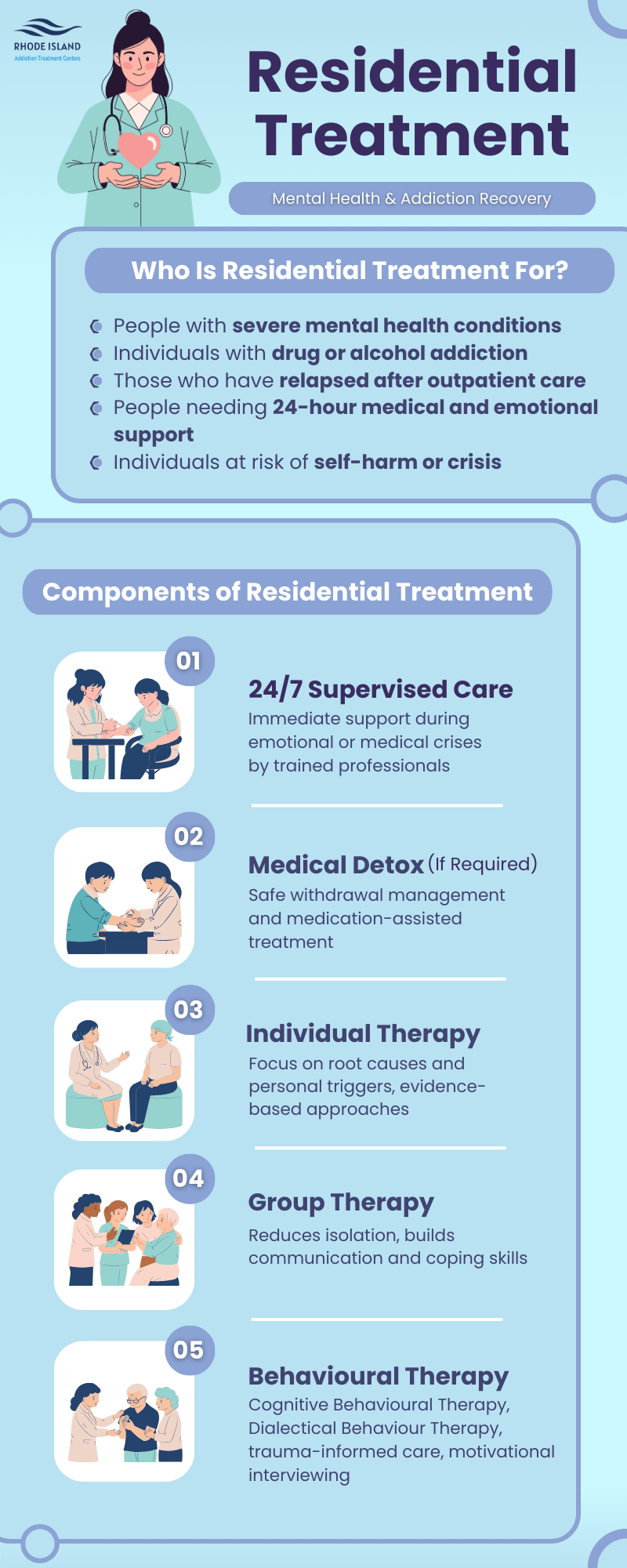
At Rhode Island Addiction Treatment Center, Inpatient Rehab For Substance Abuse In RI means you stay on-site and receive 24/7 care in a structured setting. You get consistent support, fewer triggers, and a routine that helps your mind and body settle.
Just as important, inpatient care is not only about “stopping.” It is also about building skills, creating a healthier daily rhythm, and preparing for life after discharge with relapse prevention and discharge planning.
Inpatient Vs. Outpatient In RI: The Simple Difference
Inpatient means you live at the facility and follow a daily schedule with treatment, support, and monitoring. Outpatient means you live at home and attend sessions on set days and times.
Inpatient often fits best when home triggers are strong, relapse risk is high, or you need closer medical or mental health support. Outpatient can work well when your environment is stable, and your symptoms are manageable.
Feature | Inpatient Rehab | Outpatient Care |
Living Situation | On-site | At home |
Structure | High, daily routine | Moderate, scheduled visits |
Trigger Exposure | Lower | Higher |
Best For | Higher support needs | Stable home support |
 For more on structured mental health support, read our latest blog, “Mental Health Residential Treatment In Rhode Island“, and see how residential care complements inpatient substance abuse recovery with steady clinical care and skill building.
Who Inpatient Rehab For Substance Abuse In RI Can Help Most
Many people choose Inpatient Rehab For Substance Abuse In RI after repeated relapse, risky use, or a pattern that is getting worse. Others choose it because their home environment makes recovery harder, even when their motivation is strong.
The best results usually come from the right match. A good Inpatient Rehab Center In Rhode Island considers your substance use pattern, physical health, mental health, family needs, and the type of structure that helps you stay engaged.
Common Substance Issues Treated In Inpatient Rehab
Inpatient programs often support people struggling with alcohol, opioids (including fentanyl), stimulants, benzodiazepines, cannabis misuse, and polysubstance use.
If mental health symptoms are also present, dual diagnosis support can be a major advantage. When both conditions are treated together, the plan is usually clearer and more sustainable.
Signs You May Need Inpatient Rehab In RI
- Your daily life is breaking down: sleep, hygiene, work, school, or relationships.
- Cravings or withdrawal make quitting at home feel impossible.
- You have tried to stop several times and returned to use quickly.
- There has been a scary event, like an overdose risk or frequent emergency visits.
What To Expect Inside An Inpatient Rehab Program In RI
Most inpatient programs begin with an intake assessment, then build a plan around your needs and goals. From there, days follow a steady rhythm with therapy, skill-building, and progress check-ins, so you are not guessing what comes next.
We also focus on a calm, respectful environment. Confidential care matters, and so does feeling safe enough to be honest, because honesty is what allows real progress.
Core Services In A Quality Inpatient Rehab Program
- Clinical assessment and goal setting.
- Individual therapy and group sessions.
- Evidence-based therapy education and coping skills practice.
- Medication support when needed, including withdrawal or mental health support.
- Family sessions when appropriate and approved.
- Discharge planning and step-down coordination.
A Typical Day In Inpatient Rehab
- Morning: Wellness routine, check-ins, and goal setting.
- Day: Therapy, skills groups, recovery education, and care planning.
- Evening: Support meetings, reflection, and healthy downtime.
Detox And Inpatient Rehab In RI: How They Work Together
Some people start with medical detox before inpatient rehab, especially when the withdrawal risk is high. Others enter inpatient care first and receive withdrawal support on-site, depending on their clinical needs and safety level.
Either way, time matters. NIDA explains that staying in treatment long enough is important, and participation for less than 90 days is often of limited effectiveness, while longer treatment is recommended.
Why “Quick Fix” Detox Can Be Risky
“Ultra-rapid” detox methods may sound appealing when someone feels desperate. However, faster is not always safer, especially when the body is under stress.
That is why evidence-based, medically monitored care is important. It protects your health during withdrawal and gives you a safer bridge into real treatment.
Inpatient Rehab Length And Levels Of Care After Inpatient Rehab In RI
Inpatient stays often last 30, 45, 60, or 90 days, although the right length depends on your situation. Severity, relapse history, home stability, and mental health needs can all change what “enough time” looks like.
A strong program also plans what happens next. When care steps down slowly, you keep support while you rebuild independence, which often lowers relapse risk.
Step-Down Options After Inpatient Rehab
Residential / Inpatient → PHP → IOP → Weekly outpatient therapy (the order can vary).
As structure gradually loosens, support stays in place through therapy, check-ins, and planning. This keeps you steady during the most common high-risk transition period.
Types Of Inpatient Rehab Options In RI (More Than People Expect)