
Common Dual Diagnosis Examples (Real-World Combinations)
Dual diagnosis does not look the same for everyone, yet certain pairings show up often because people may use substances to “quiet” symptoms, and then feel worse when the substance wears off. Over time, the cycle can tighten until both conditions feel inseparable.
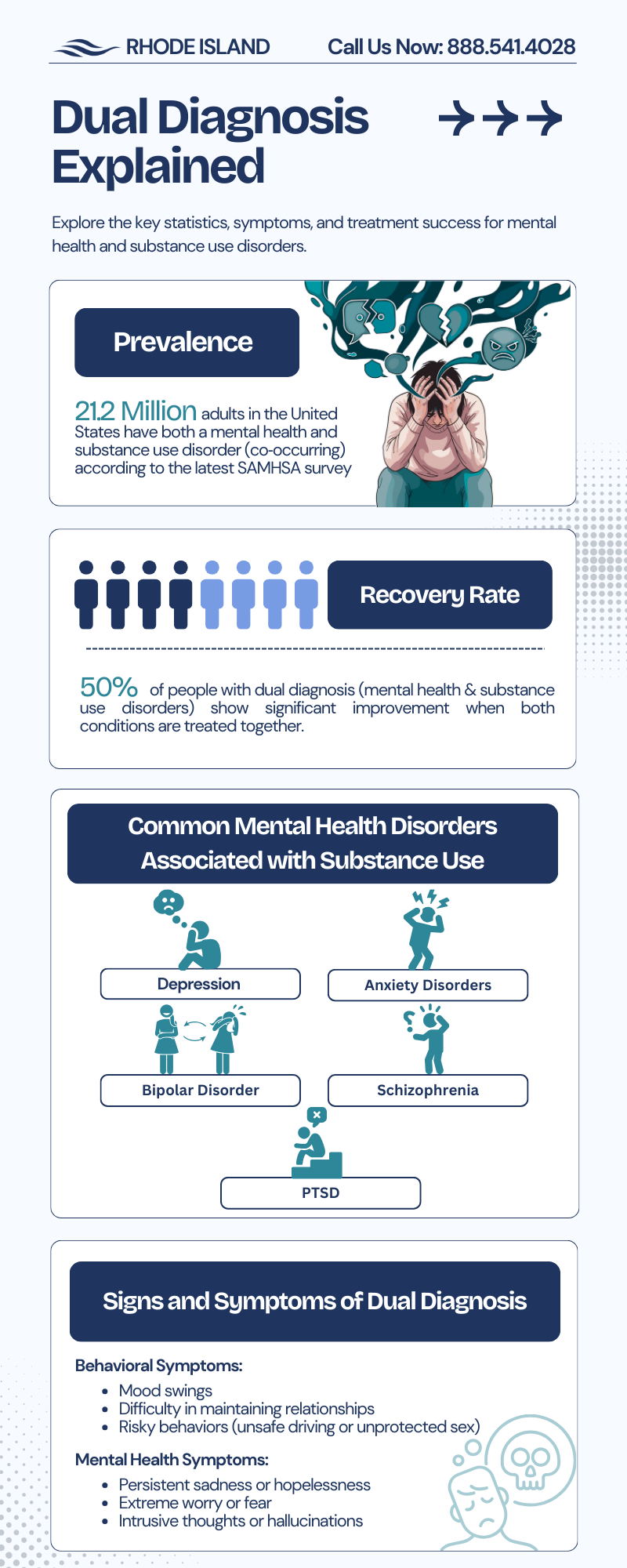
Recognizing a common pairing is not a diagnosis, but it can help someone seek the right screening and stop guessing. One clinical overview lists several common examples that treatment teams see frequently.
- Depression and alcoholism.
- Anxiety disorders and prescription drug addiction.
- Bipolar disorder and cocaine addiction.
- PTSD and opioid misuse.
What Treatment Looks Like Inside A Dual Diagnosis Residential Program
A good residential day is structured, not rigid, because structure reduces decision fatigue and helps the brain settle. Therapy blocks, skill-building, and healthy routines work together, so progress is not only emotional, but also practical.
At the same time, a dual diagnosis residential program blends therapy, psychiatry, and recovery support so both conditions are treated as real, medical concerns. That combination is the core of inpatient dual diagnosis treatment RI, and it is one reason many people feel “held” by the program instead of overwhelmed by it.
- Evidence-based therapy such as CBT and DBT-informed approaches (thought patterns, emotion regulation, behavior change).
- Group therapy and peer accountability (practice honesty, boundaries, and support skills).
- Medication support and psychiatric follow-ups when needed (stability, side-effect monitoring, continuity).
- Family involvement and recovery education (communication skills and practical support planning).
Transition Planning After Residential Dual Diagnosis Treatment In RI
The goal is not only to complete residential care, but to keep improving after you leave. Step-down support may include PHP, IOP, outpatient therapy, sober living, and medication continuity, depending on your clinical needs and daily responsibilities.
This is where we focus heavily at Rhode Island Addiction Treatment Centers, because a strong handoff reduces “gaps” that can trigger relapse. We coordinate outpatient care for adults 18+, and we are about 10 minutes from Providence, which makes follow-through simpler when life restarts.
- Follow-up appointments scheduled before discharge (therapy, psychiatry, medication refills).
- Crisis plan for mood symptoms and cravings (early-warning signs, coping steps, and who to call).
- Ongoing therapy and peer support plan (groups, sponsor or mentor, and family boundaries).
Case Study: Integrated Residential Treatment In Practice
A published report on implementing an integrated residential program for co-occurring disorders followed a 12-week, full-time model designed to treat mental illness and substance use together.
Among 86 participants who completed the program, the authors reported clinically significant improvement in mental health symptoms, skill and knowledge gains, and high satisfaction, despite “very problematic” clinical and social histories.
The paper also highlights that the program maintained strong fidelity to its model, which supports a key point: integrated care can work in real settings when teams stay consistent and structured.
 For a clear next step after dual diagnosis stabilization, read our latest blog “Alcohol Detox Program In Rhode Island” to understand how safe, medically supported withdrawal can fit into your larger recovery plan.
How To Choose A Quality Residential Dual Diagnosis Program In RI
Quality shows up in how the program evaluates you, how it treats both conditions at once, and how it plans your discharge before you ever leave the building. A serious program will be clear about who provides psychiatric care, how medications are managed, and how progress is tracked.
Just as important, detox, mental health stabilization, therapy, and aftercare should connect into one plan, because dual diagnosis recovery is rarely linear.
- Clinical Team: Psychiatric support plus licensed therapists who regularly treat co-occurring conditions.
- Integrated Plan: One coordinated plan that addresses symptoms, cravings, and relapse prevention together.
- Discharge Planning: A written next-step plan with scheduled follow-ups, not vague suggestions.
- Continuity: Clear coordination into outpatient care when you step down from residential support.
FAQs
What is the best treatment for dual diagnosis?
The best approach combines treatment for your mental health condition and your substance use disorder at the same time, ideally with the same provider(s) coordinating care. Plans should be individualized because needs differ by diagnosis, safety risk, and recovery supports.
What is the best example of a dual diagnosis?
Common examples include depression with alcoholism, anxiety disorders with prescription drug addiction, bipolar disorder with cocaine addiction, and PTSD with opioid misuse. These pairings matter because symptoms and substance use can reinforce each other if they are treated separately.
What is the dual treatment approach?
Dual diagnosis treatment is a comprehensive approach that treats mental health and substance use disorders together, instead of in two disconnected tracks. This approach is important because treating only one side can leave the other side active, which raises relapse risk and slows recovery.
Conclusion
When mental health symptoms and substance use are treated together, recovery becomes more stable and more realistic. Studies highlight combined care as the best path, and residential treatment gives that approach the structure it needs to work day after day.
If you are looking for dual support that continues after discharge, Rhode Island Addiction Treatment Centers can help coordinate residential referrals and outpatient next steps for adults 18+.
We are about 10 minutes from Providence, and our team focuses on practical continuity, not quick fixes. Call 888.541.4028 to start planning your next step.