How Cocaine Rehab in Rhode Island Supports Real Neurological Recovery
Did you know that in 2024, over 61% of all overdose-related deaths in Rhode Island were due to cocaine? Rhode Island also happens to be one of the top six states with the highest rate of cocaine usage among young adults. One may think, why are individuals not trying to quit and fight the addiction? Well, there is a damn good reason for that; cocaine rewires your brain’s neural pathways. This means that individuals addicted to cocaine simply cannot stop on willpower alone.
However, a science-backed solution does exist: structured programs of cocaine rehab in Rhode Island offer evidence-based treatments that not only support sobriety but also help heal your brain. Today, let’s talk about the neurological damage and how recovery begins with professional care.
The Neurological Roots of Cocaine Addiction
Cocaine addiction is fueled by a number of factors, such as socioeconomic stressors, co-occurring disorders, or even using the drug for fun. What starts as a one-time experiment slowly turns into a full-blown addiction.
As per the latest studies, over 2.2 million people in the United States consume cocaine on a regular basis. That is a concerning situation, and here’s what it does to your neurobiology:
Flooding Brain with Dopamine:
Cocaine consumption causes dopamine levels to rise by up to 10 times – that’s the amount produced by your natural reward system, like when you consume good food. It does so by blocking the reuptake of dopamine and reinforces reward-seeking behavior so that the brain craves repetition. This pattern leads to your brain gradually reducing its natural dopamine signaling, which eventually results in anhedonia, and individuals turn back to that drug-induced high.
Gray Matter Loss:
Long-term cocaine usage results in gray matter loss in the brain. Since gray matter is involved with emotional regulation, memory, and decision-making, the result is similar to that of an aging brain with diminished impulse control. So that even if you want to quit, you simply don’t have the neurological capacity to self-regulate
Cerebral Blood Flow Disruption:
Cocaine misuse also disrupts the normal blood flow towards your brain, which in turn affects communication between critical brain regions. This causes a lack of self-control and cognitive deficits that make recovery even more challenging, especially if you try to treat yourself without professional medical intervention.
Now, before we move to the solution, let’s first discuss whether you need a cocaine rehab or not.
Signs You Need Cocaine Rehab in Rhode Island
Recognizing that you need help is the first step towards a successful recovery journey. Here are a few warning signs to keep an eye out for yourself, and your loved ones.
- Uncontrollable cravings
- Relying on cocaine for day-to-day function
- Sudden paranoia or emotional numbness
- Neglecting work and relationships
Remember, acknowledging these signs to yourself may feel like a challenge, but it is not a sign of weakness. It is, in fact, a huge step towards healing, which can help you build a healthier life.
Once you have recognized the problem, you know for a fact that professional help is required. At such a point, it is important to seek treatment. But one may question, why should rehab be considered at all? Let’s discuss.
Why Does Cocaine Rehab in Rhode Island Work?
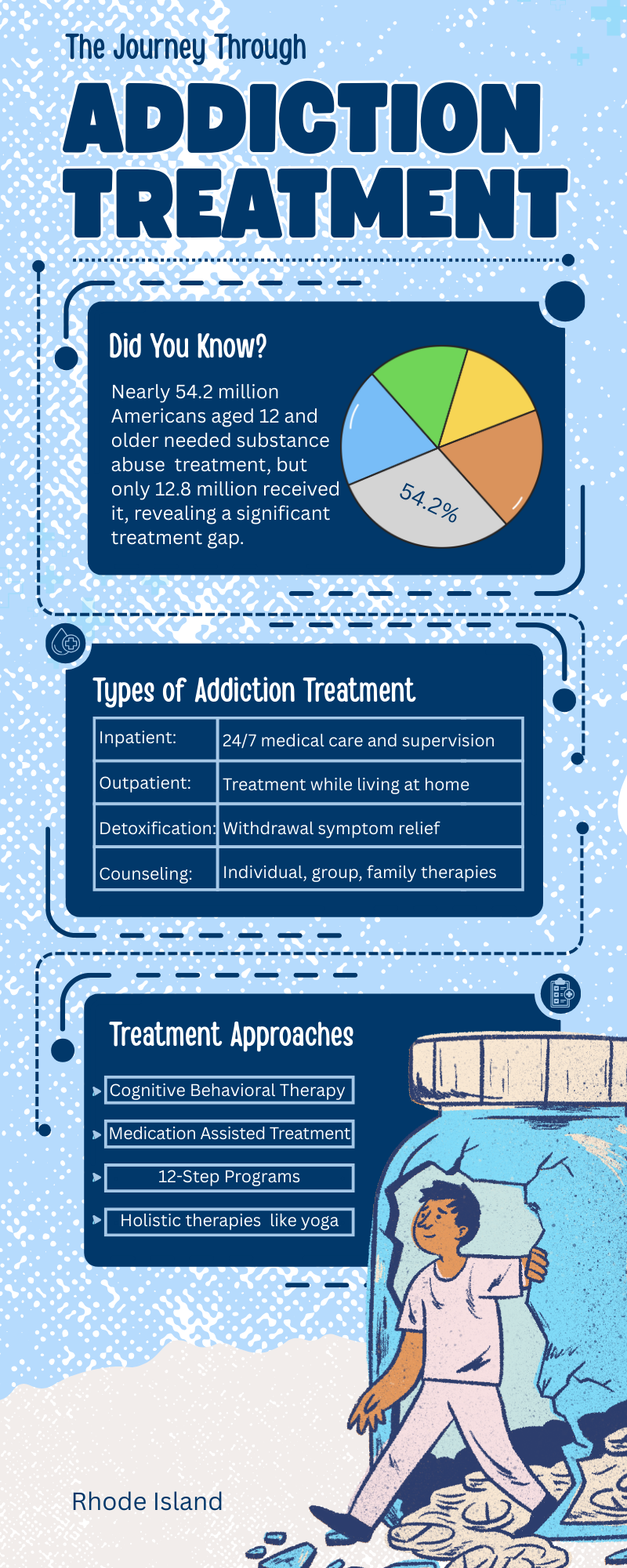
Given how deeply cocaine alters one’s neurological function, successful recovery requires a structured clinical environment with medical support that functions on science, not just willpower. Cocaine rehab in Rhode Island Addiction Treatment Centers is built specifically to treat addiction with evidence-based care, which directly addresses the neurobiology of how cocaine alters one’s brain. Here’s what you can expect from a professional program:
Evidence-Based Treatment Models:
Studies have confirmed that Cognitive Behavioral Therapy (CBT) reduces stimulant relapse rates by up to 60%. This is because evidence-based therapy models – like CBT, DBT, and trauma-informed therapy – focus on rewiring thought patterns that are tied to impulsivity and reward-seeking behavior. CBT works to strengthen your prefrontal cortex, which results in better self-control as well as decision-making.
Neurological Stabilization:
Every professional cocaine rehab in Rhode Island includes clinical detox. It is important to note that cocaine withdrawal is not life-threatening. But it is neurologically intense, which is why medical supervision is needed during a patient’s crash phase. With medically monitored detox, you can expect fewer depressive symptoms and higher treatment retention with a stabilized mood.
Neuroplastic Recovery Support:
Your brain is capable of healing through neuroplasticity – but it requires a structured, supportive environment to do so. Research shows that within 12 months of abstinence combined with behavioral therapy, patients can notice a significant improvement in their dopamine function as well as cognitive clarity. Alongside, rehab environments accelerate the process with stress regulation and coping exercises that support neural recovery.
Relapse Prevention with Aftercare:
Studies show that relapse rates are reduced by 40% if individuals seek structured aftercare like outpatient therapy and group counselling. This is because every quality cocaine rehab in Rhode Island offers aftercare planning and continued support to protect you against stress-induced relapse.
Rebuild Your Brain and Life: Begin Your Cocaine Recovery Journey Now
Cocaine addiction directly impairs your neurological function, making it nearly impossible to quit on your own without professional help. But you don’t have to fight this battle alone. Cocaine rehab in Rhode Island Addiction Treatment Centers is here to help you achieve sobriety, stability, and healing through evidence-based treatment programs.
Our programs are designed specifically to help you restore control with structured care and regain clarity of your mind and life.
So, if you or a loved one is struggling, do not hesitate in reaching out to us at 888-541-4028. Remember, you deserve recovery with support; don’t let addiction tell you otherwise, and get the professional help you require.