
Family therapy helps repair trust, clear up misunderstandings, and rebuild healthier patterns of communication. It can also teach loved ones how to support you without enabling old habits. For many people, this part of the program is what makes sobriety feel possible at home, not just at the clinic.
Case management plays a quieter but equally important role. A case manager can help you coordinate medication management, housing support, employment services, and aftercare plans. This kind of support makes it easier to follow through on treatment recommendations and reduces the risk that practical obstacles knock you off track.
Key Services Offered In An IOP
An effective IOP does not just put you in a room with others. It layers several evidence‑based services together so you can heal on more than one level at once.
Evidence-Based Therapies
Most IOP programs include evidence‑based therapies such as:
- CBT (Cognitive‑Behavioral Therapy) – helps you recognize and change harmful thought patterns and behaviors that drive addiction.
- DBT (Dialectical Behavior Therapy) – teaches you to accept intense emotions while still choosing healthier actions.
- Motivational Interviewing – strengthens your internal motivation to change by exploring your values and goals.
These modalities work together to help you understand why you use, how to manage cravings, and how to respond when life feels overwhelming.
Medication Management
For some clients, medication management is a key part of treatment. Certain medications can reduce cravings, ease withdrawal symptoms, or stabilize mood disorders that often travel with addiction. When medication is used, it is usually coordinated with therapy so you are not just numbing symptoms but learning skills to live without them.
If you have questions about medication‑assisted treatment (MAT), discussing them with a qualified clinician within your IOP can help you weigh the benefits and risks. It is a personal choice, and a good program will support you either way.
Support Groups And Peer Engagement
Many IOPs also connect you to support groups such as 12‑step programs, SMART Recovery, or other peer‑led communities. These groups provide peer support, accountability, and long‑term connection beyond the formal program.
Peer engagement can be especially powerful because it happens outside the clinic. You start to see that recovery is not just something you do at treatment; it is something you live with other people who understand what you are going through.
 If you are wondering how long treatment should last to truly support your recovery, read our latest blog: “How Long Should You Stay In Addiction Treatment?” to see how timing and structure can shape your long‑term success.
Duration Of IOP Programs
The length of an IOP program is rarely a fixed number. It depends on what you need, how you progress, and how your life situation changes.
Flexible Length Based On Needs
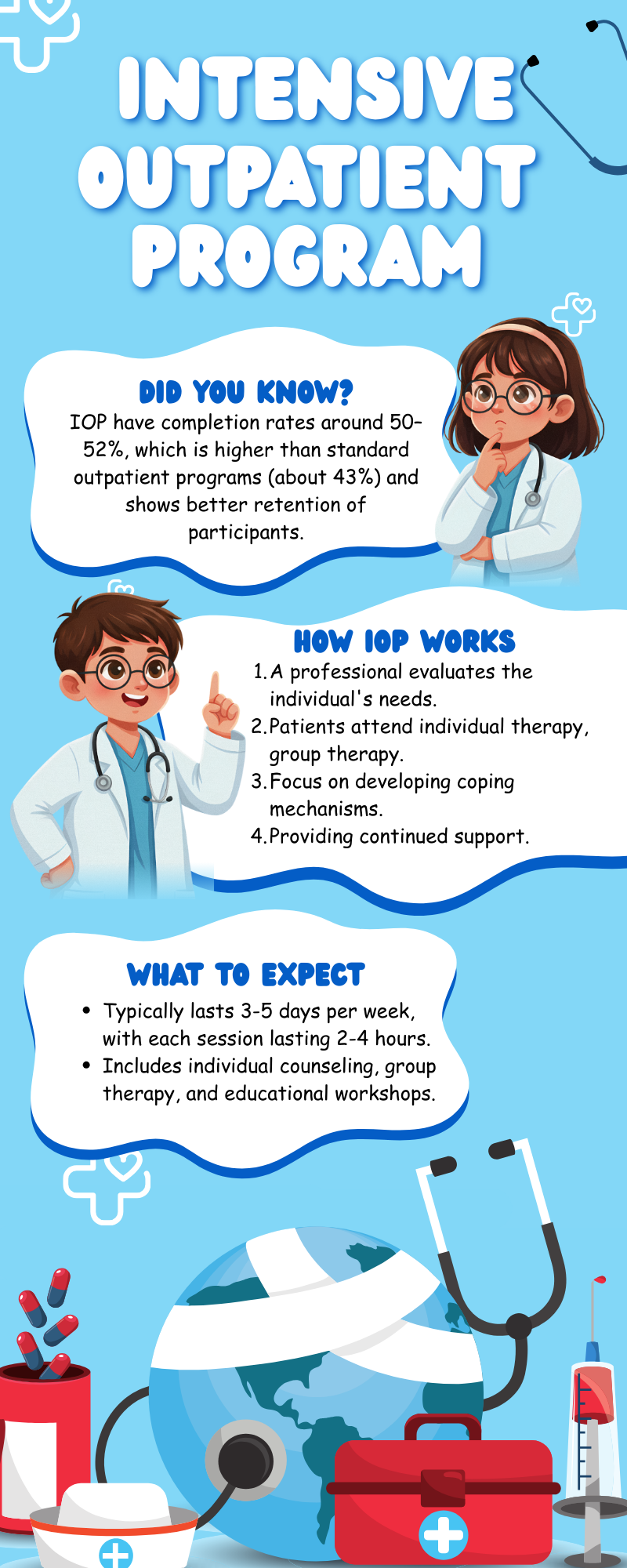
Most IOPs last between about 8 and 12 weeks, though some people continue for several months depending on their progress and support system. Factors that influence the duration of IOP programs include:
- Addiction severity and prior treatment history.
- Presence of co‑occurring mental health disorders such as depression, anxiety, or PTSD.
- Your level of commitment, attendance, and ability to apply new skills outside of sessions.
Treatment teams usually review your progress regularly and adjust the length and focus as you move forward.
Transitioning From IOP
When you near the end of your IOP, clinicians often guide you toward basic outpatient therapy, support groups, and other forms of aftercare. This stepwise transition helps keep you connected to support even after the most intensive phase is over.
Benefits Of Participating In An IOP
There are at least three big advantages to choosing an IOP for addiction over only standard outpatient care.
1. Real-World Recovery Practice
In an IOP, you are not separated from your life. You go to work, you handle family stress, and you face real‑time triggers while still connected to therapy.
That constant feedback loop helps you test new skills when they matter most, not just when you are sitting in a safe room.
2. Flexibility And Continuity
Unlike residential treatment, an IOP lets you keep your job, your home, and your basic routines. The structure is strong enough to guide you, but flexible enough to fit around your obligations.
Many programs even offer day or evening sessions so you can choose a time that does not sabotage your responsibilities.
3. Holistic Support
A strong IOP combines therapy, peer support, case management, and sometimes wellness education or vocational help.
This mix of services can improve not only your recovery outcomes but also your mental health, relationships, and quality of life.
Real-Life Case Study: Success Through IOP
A recent integrated intensive‑outpatient‑care study in 2025 followed adults with substance use disorders who completed a four‑month IOP that combined group therapy, individual counseling, medication support, and case management.
The study found that participants who stayed in the program for at least 12 weeks showed meaningful reductions in drug and alcohol use, along with improved mood and daily functioning. Many reported that having structure during evening hours made it easier to resist drinking or using after work, and that peer connections helped them feel less alone long after sessions ended.
This kind of real‑world evidence shows that when an IOP is well‑designed and well‑supported, it can offer recovery outcomes that rival or even surpass those seen in more restrictive settings.
How Rhode Island Addiction Treatment Centers Structure IOP
In Rhode Island, many centers design their IOP programs to match the needs of high‑functioning but struggling adults. Instead of a one‑track model, they build a flexible, step‑by‑step path that fits your life, not the other way around.
Personalized Treatment Plans
Every client in Rhode Island addiction treatment center usually receives a customized plan. This can include:
- How many days per week you attend.
- Which therapies you focus on (CBT, DBT, trauma‑informed work, family sessions).
- Whether you need medication management or case management referrals.
Therapists and clinicians adjust your plan over time as you grow, so the program feels like it is moving with you, not trapping you in an old script.
Flexible Day And Evening Schedules
Many Rhode Island programs offer day and evening IOP schedules so you can choose a time that fits your work and family life. Whether you are a shift worker, a parent, or a student, flexibility makes it easier to stay in treatment long enough for it to matter.
Focus On Sustainable Recovery
The real goal is not just to get you through a set number of weeks but to prepare you for long‑term recovery. Clinicians often weave relapse prevention, peer support, and aftercare planning into each phase of the IOP so you leave with more than a certificate – you leave with a plan.
How To Decide If IOP Is Right For You
Choosing an IOP over residential or standard outpatient care is a personal decision, but it does not have to be confusing.
Professional Assessment
A licensed clinician can evaluate your addiction severity, mental health, and home support to recommend the most suitable level of care. If you have completed detox and your environment is relatively safe, an IOP may be the right middle step.
Personal Readiness
You also need to ask yourself a few honest questions:
- Can I commit to 3–5 days per week for several weeks?
- Do I have a stable place to live where I feel safe?
- Am I ready to show up, participate, and try new ways of coping?
If the answers lean toward “yes,” then an IOP program for addiction may be the smart, sensible bridge between inpatient care and everyday life.
Conclusion: Stepping Into An IOP Program With Confidence
An Intensive Outpatient Program (IOP) is not about escaping your life. It is about entering your life with new tools, support, and a clear plan.
If you are ready to rebuild your habits, face real‑world triggers, and keep your job and family roles intact, IOP can be a powerful next step.
At Rhode Island Addiction Treatment Centers, our IOPs are flexible, evidence‑based, and personalized to your needs. You can practice recovery in real time, surrounded by both professional guidance and peer support.
If you are wondering what happens in an IOP program for addiction and whether it fits your life, reach out today at 888.541.4028 and take the next step toward a stronger, more stable future.