
What Does “Checking Rehab Coverage” Actually Tell You?
A proper benefits check should tell you more than “yes” or “no.” It should explain your deductible, copay, coinsurance, out-of-pocket maximum, whether the provider is in network, and whether prior authorization is required. Butler Hospital specifically warns that some policies require hospitalization pre-approved or require the member to call when admitted, and that not following policy rules can affect payment. That is why details matter.
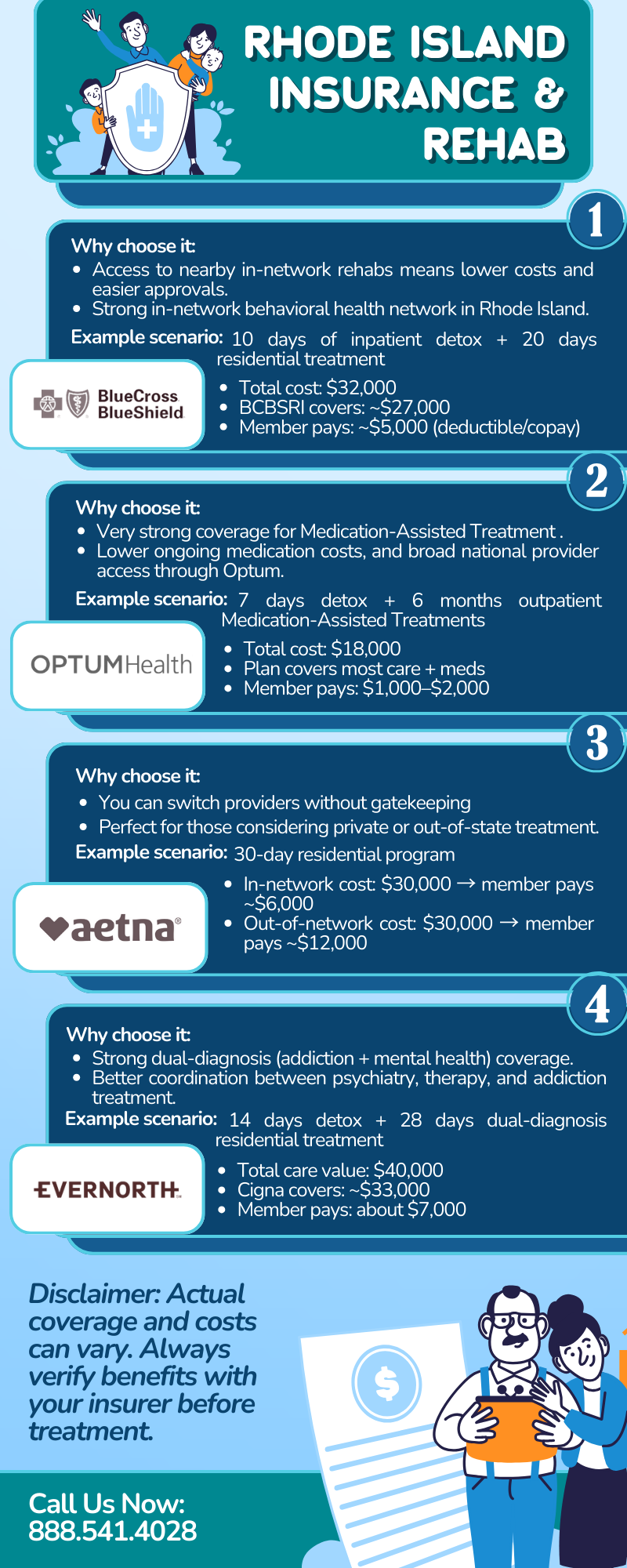
This is also where people begin to feel less lost. Once you know those numbers, you can compare options more calmly. Maybe one plan covers outpatient care generously, but requires authorization for inpatient care. Maybe your deductible is almost met, which changes the math. Maybe your out-of-pocket maximum is lower than you expected. When you Verify Insurance for Rehab in Rhode Island, you are really verifying the path, not just the price.
Coverage Term | What It Means | Why It Matters |
Deductible | What you pay before the plan starts sharing costs | Affects your upfront bill |
Copay | A fixed payment for a visit or service | Helps estimate session costs |
Coinsurance | A percentage you pay after the deductible | Can change inpatient or outpatient totals |
Out-Of-Pocket Maximum | The yearly ceiling on covered cost-sharing | Shows your worst-case covered spending |
Prior Authorization | Approval the insurer may require before some services | Can affect timing and approval |
In Network / Out Of Network | Whether the provider has a pricing contract with your plan | Often changes your final cost |
The definitions above reflect how rehab centers and insurers describe billing and coverage issues, and they match the questions patients are urged to ask before admission.
Treatment Levels Covered In Rhode Island
Coverage is not only about whether rehab is included. It is also about which type of rehab is included. Rhode Island’s state resource guide and Medicaid provider materials show that treatment can range from medical detox and residential inpatient services to outpatient counseling, family therapy, methadone maintenance, and other recovery support. Medicare also now covers intensive outpatient program services for mental health conditions, including substance use disorders, and it covers opioid treatment program services as well.
Neighborhood also states that it covers behavioral health services such as inpatient care, outpatient therapy, residential substance treatment, crisis stabilization, PHP, and IOP. So when you check rehab coverage RI, ask the center to match your benefits to the right clinical level, not just to “rehab” in the abstract. A detox benefit is not the same as an IOP benefit, and an outpatient benefit is not the same as residential care.
Common Levels Of Care To Ask About
- Medical Detox
- Residential Inpatient
- Partial Hospitalization Program (PHP)
- Intensive Outpatient Program (IOP)
- Standard outpatient therapy
- Medication-Assisted Treatment (MAT) such as methadone, buprenorphine, or naltrexone/Vivitrol
 If you need help right away after checking your benefits, read our latest blog, “Same-Day Rehab Admissions In Rhode Island,” for clear guidance on how to move quickly from insurance verification to immediate treatment access.
Case Study
A strong Rhode Island case study comes from the Rhode Island Department of Corrections’ statewide medications for addiction treatment program. After the program was implemented, researchers found a 61% reduction in post-incarceration overdose deaths among people recently released from custody.
A JAMA Psychiatry analysis described the reduction as large and clinically meaningful, and Rhode Island officials linked the results to continued access to methadone, buprenorphine, or naltrexone during incarceration, plus referral pathways after release.
The lesson is clear: when treatment is started quickly, and continuity of care is protected, people have a far better chance of surviving a high-risk period and re-entering the community more safely.
What If My Insurance Is Out-Of-Network?
This is where many families panic, but it is not always game over. If a program is out of network, your costs may be higher, or your plan may reimburse at a lower rate. Still, that does not automatically mean you have no options. Sometimes the better question is whether there is an in-network provider nearby that offers the same level of care and the same clinical fit.
If not, ask the admissions team whether they offer out-of-network support, payment planning, or guidance on requesting an exception from your insurer. Some treatment centers can help patients understand these pathways, especially when local access is limited or the clinical need is specific. It is always worth asking before you walk away. As the saying goes, do not leave money on the table.
FAQ
Is Rehab Insurance Verification Private?
Yes. Health plans and covered providers handling insurance checks are generally subject to HIPAA privacy and security rules, and substance use disorder records also have special federal confidentiality protections.
Does RI Medicaid Cover Long-Term Residential Rehab?
Rhode Island Medicaid materials show coverage for substance abuse treatment services in residential settings, and the state continues to bill SUD residential services through RI Medicaid. Exact duration and authorization depend on medical necessity and program rules.
Can I Verify Insurance For A Loved One?
Often yes, at least to begin the process, but the rehab may need additional details or permission before sharing full benefit information. Privacy rules still apply.
Does Medicare Cover Addiction Treatment?
Yes. Medicare covers mental health and substance use disorder services, including inpatient and outpatient care, IOP, and opioid treatment program services.
Conclusion
Verifying Insurance for Rehab in Rhode Island is not just a billing task. It is the step that turns uncertainty into a plan. Rhode Island law gives you parity protection, many plans cover real behavioral health services, and the state’s own resource guide makes clear that many options are free or low cost. That means help may be closer and more affordable than you think.
Your health is an investment, not an expense. So if you are ready to move forward, check rehab coverage RI now through a secure benefits form or by calling the admissions team directly. And if the situation feels urgent, pair that step with immediate Rhode Island Addiction Treatment Centers right away. One phone call can clear up a lot of fog.