
How to Treat Opioid Addiction in Rhode Island: Addressing the Mental Roots
You’re sitting calmly, going about your day, when you suddenly feel the need to take opioids. In that moment, you realise that this has become an everyday occurrence.
You begin to notice what triggers it, what events, feelings, or moments influence you and cause that need. Is it a prescription after surgery, a stressful week at work, or hidden emotional pain that can slowly turn into a dependence and affect your life?
What used to be manageable slowly becomes impossible to control. And somewhere along the way, the question shifts from “How did this happen?” to “Why can’t I stop?”
In actuality, opioid addiction frequently involves more than just physical cravings. Addiction is often deeply connected to underlying emotions like stress, unresolved trauma, anxiety, or even a persistent sense of emptiness. This is where Rhode Island’s successful opioid addiction therapy is really helping.
Good treatment goes beyond detox and focuses on what caused the addiction. With the care and support of health professionals, people can be easily treated for opioid addiction. You just need the best Rhode Island addiction treatment center to regain your health.
Why Opioid Addiction Begins in Rhode Island
Opioid addiction often develops gradually and softly, with no visible turning point. What begins as a habit, a source of relaxation, or a coping mechanism might gradually develop into a dependence before the individual recognises it.
This is why it’s so important to ask why addiction develops in the first place, rather than simply when it does.
The Psychological Triggers Behind Addiction
It is unusual for opioid addiction to begin with a desire to mistreat anything. Instead, it often grows from:
- Chronic stress or trauma
- Anxiety or depression
- Unresolved emotional pain
- Chronic physical pain leading to dependency
In fact, research highlights how easily this transition can happen.
Even when opioids are prescribed for valid medical reasons, some individuals gradually develop long-term dependence.
About 3.7% of people switched from short-term to chronic opioid usage after receiving their first prescription, according to research conducted in Rhode Island.
The Brain’s Reward System
Opioids can provide a strong sensation of emotional relief in addition to relieving physical pain. Over time, the brain starts to link opioids to coping rather than merely pain relief. That’s the point where addiction shifts from being purely physical to deeply psychological.
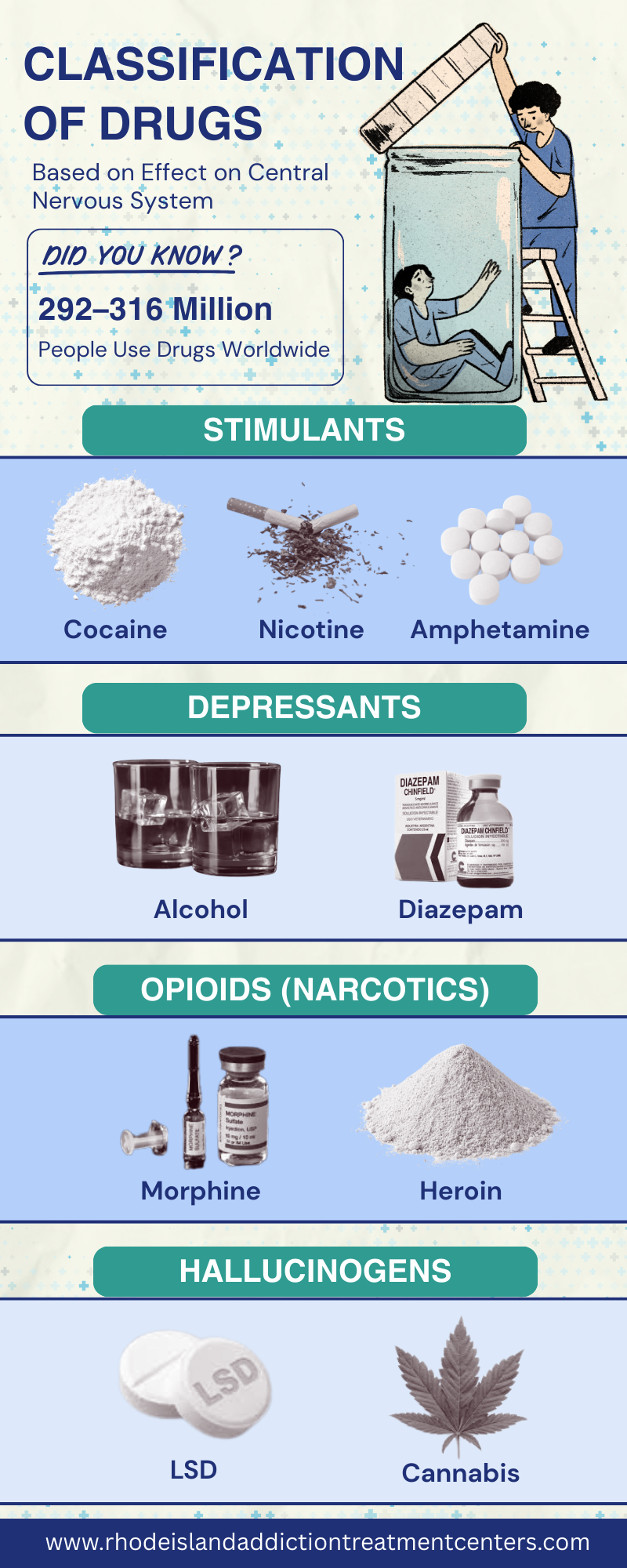
Why Mental Health and Opioid Addiction Are So Deeply Connected
Is there a connection between opioid addiction and mental health?
For many, it’s at the core of the conflict rather than merely a contributing cause.
Research continuously shows that in therapy for opioid addiction in Rhode Island, patients are frequently accompanied by mental health issues, including depression, anxiety, trauma, and chronic stress. These conditions can either lead to substance use or worsen it over time.
People don’t use opioids only to get “high.” They use them more often to feel less anxious, stressed, and emotionally drained.
This starts a cycle that is hard to break:
- Using opioids as a coping strategy for emotional pain.
- Short-term respite eventually gives way to reliance.
- Withdrawal, remorse, or shame all contribute to a decline in mental health.
- Increased mental anguish leads to increased opioid usage.
As a result, many opiate rehab RI programs that focus solely on medicine or detoxification may fall short in addressing the underlying emotional and psychological issues.
What Makes Opioid Addiction Treatment RI Programs Effective?
In terms of treating opioid addiction in RI, the most successful programs integrate accessibility, individualized care, and ongoing support.
Centers of Excellence (COEs)
Specialized centers have been established in Rhode Island that offer:
- Quick access to care (often without the need for an appointment)
- Combined psychological and medical care
- Assistance with employment and social reintegration
These programs remove barriers, making recovery easier to start and stick with.
Community-Based Recovery
Recovery is not a stand-alone process. Numerous programs consist of:
- Peer recovery experts
- Sessions of group therapy
- Family therapy
As a result, a network of support is established that lasts long after treatment is over.
What Therapies Address the Root Causes of Opioid Addiction Treatment in Rhode Island?
Along with detox, effective opioid addiction treatment in Rhode Island also targets the mental health issues behind addiction. Some of the key therapies are:
- Trauma-Informed Therapy: It is very helpful for patients who are dealing with past trauma in a safe and supportive setting, which lowers the risk of getting traumatised again.
- Cognitive Behavioral Therapy (CBT): It is very helpful in identifying and changing harmful thought patterns and behaviors.
- Motivational Interviewing (MI): This allows patients to develop their own reasons for rehabilitation rather than depending on external pressure.
- Dialectical Behavior Therapy (DBT): Supports trauma recovery, emotional regulation, and reduces self-harming behaviors.
Promoting long-term recovery rather than simply abstinence is more helpful than quick fixes. The above-mentioned therapies imply the same.
How Can People Prevent Relapse After Opiate Rehab in RI?
One of the most common and important questions for anyone in recovery is how to stay on track after treatment. Relapses are rarely abrupt; instead, they often develop gradually through mental and emotional changes before becoming physical.
Spotting Early Warning Signs
The key is awareness. Look for symptoms like:
- Increased social isolation or stress.
- Romanticising previous drug usage.
- Skipping treatment or support sessions.
- Sudden mood shifts.
Create a Relapse Prevention Plan
A successful relapse prevention strategy is proactive, personalized, and practical.
Find out what makes you upset. There are several types of triggers:
- People: old friends and acquaintances who use.
- Locations: locations where drugs were used previously.
- Feelings of loneliness, anger, and boredom.
Plan reaction
- Make sure you know what to do when each trigger occurs.
- Contact a therapist or a sponsor.
- Go to a safe location.
- Use mindfulness or grounding techniques.
Stay in touch
Recovery thrives in a community. Staying in contact with friends, family, and support groups may be critical because isolation is one of the primary reasons individuals relapse.
Final Thoughts!
Mental and emotional health disorders some of the main causes of opiate addiction. Rhode Island treatment clinics assist clients in regaining purpose, stability, and direction in their lives. The clinics treat both the physical and the psychological aspects of opiate addiction.
At Rhode Island Addiction Treatment Center, we offer deeply personal, warm support for absolutely everyone. Please reach out to us today to begin healing yourself or someone you deeply love.
Read Next: Aftercare & Continuing Care in Rhode Island: What Comes After Treatment Ends