
Free Vs Private Rehab In Rhode Island: What’s The Difference For Your Recovery?
Yes! both free and private rehab can help, but they are not the same. In Rhode Island, free programs lower the money barrier, while private care often gives faster access, more one-on-one time, and a wider mix of treatment options.
“The best rehab is not just the one you can afford. It is the one you can actually start, stay in, and grow through.”
That question sits at the heart of free vs private rehab in Rhode Island. Is free treatment enough, or does private care fill gaps that can shape long-term sobriety? For many families, that is not a small question. It is the whole ballgame.
Rhode Island’s recovery story is moving in a better direction, but getting help is still not always simple. In 2023, 48.5 million people age 12 and older in the United States had a substance use disorder, and only 15.6% received treatment, according to SAMHSA. That gap says a lot. Some people need the lower-cost support of State-Funded Recovery RI programs, while others need faster admission, more privacy, and more personal care through private rehab.
At Rhode Island Addiction Treatment Centers, we help people sort through these choices every day. This guide explains free vs private rehab in Rhode Island in simple words, so you can see what each option offers, what it may cost, and what may fit your life best.
Factor | Free / State-Funded Rehab | Private Rehab |
Wait Times | Often longer, based on funding and bed space | Often faster when beds are open |
Cost | Usually Medicaid, grants, or low-cost programs | Often commercial insurance or self-pay |
Therapy Style | More group-based, core services | More one-on-one care and focused tracks |
Privacy | More limited | Often greater privacy and lower census |
Admission Flexibility | Can involve more steps | Often faster insurance checks and intake |
The Financial Side Of Rhode Island Rehab
When people compare free vs private rehab in Rhode Island, cost is usually the first thing they ask about. That makes sense. Addiction treatment can feel urgent, but bills are real, and nobody wants to promise help they cannot keep paying for.
Free or state-funded care usually depends on Medicaid, public grants, or other community funding. Private care often works through commercial insurance, out-of-network plans, or self-pay. In simple terms, one model is built around public support, while the other is built around private coverage and direct payment.
How State-Funded Rehab Works
State-funded rehab can be a good starting point when money is tight.
It helps many people get care without the high upfront cost of private treatment.
What It May Include
- Detox: Medical support to help you get through withdrawal safely.
- Outpatient Care: Therapy and treatment visits while you keep living at home.
- Medication Support: Medicines that may help with cravings, withdrawal, or recovery.
- Residential Treatment: Live-in care for people who need more structure and daily support.
- Medicaid Coverage: Rhode Island Medicaid may help pay for these services if you qualify.
- Program Rules: The exact care you receive depends on medical need, provider approval, and available funding.
How Private Rehab Costs Usually Work
Private rehab may seem expensive at first. Still, many people end up paying much less than they expect.
What Changes The Final Cost
- Insurance Plans: Many private rehab centers work with PPO or other commercial insurance plans, which can lower the amount you pay yourself.
- Benefit Check: Before treatment starts, the center usually checks your benefits and explains what your plan may cover.
- Out-Of-Pocket Costs: You may still have costs like a deductible, copay, or coinsurance, depending on your plan.
- Faster Access: Private care may also offer quicker admission, more therapy time, and more personal attention, which can matter when someone is ready for help now.
A Real Rhode Island Case That Changed The Conversation
In January 2025, federal prosecutors said the owner of a Rhode Island-based addiction treatment chain was sentenced for billing Medicare, Rhode Island Medicaid, and private insurers for recovery support services that were not actually provided.
According to the U.S. Department of Justice, staff were told to record 45-minute counseling sessions even when some patients received only 5 to 10 minutes of care, or less.
The case involved more than 2,000 patients, and the owner was ordered to pay over $3.5 million in restitution.
It is a sobering example of why families should ask how much real therapy, individual attention, and clinical oversight a program truly provides before starting treatment.
Access, Wait Times, And The Window For Change
Timing matters in recovery. A person may finally say, “I’m ready,” after months or years of struggle. If treatment is delayed too long, that small opening can close just as fast as it appeared.
This is one of the biggest differences in free vs private rehab in Rhode Island. State-funded programs may have more steps, limited bed space, or longer waits. Private centers may be able to move faster, especially when they have open detox beds and an admissions team ready to verify insurance right away.
Why Wait Time Matters
Addiction rarely waits for a clean calendar. Someone may ask for help after an overdose scare, a job loss, a family crisis, or just one morning when they are plain tired of living this way. That moment matters.
If admission takes weeks, the person may lose nerve, return to use, or face another emergency before care begins. Fast placement is not just a convenience. Sometimes it is the difference between action and another false start.
Where Private Care Can Help
Private centers can often move faster because they control their own intake process more directly. When the beds, staff, and insurance approval line up, a person may start detox or assessment the same day.
That speed can be a real strength for private addiction treatment Providence options. It does not mean private care is automatically better for everyone. It means it may fit people who need quick action, more privacy, or a stronger handoff from detox to therapy.
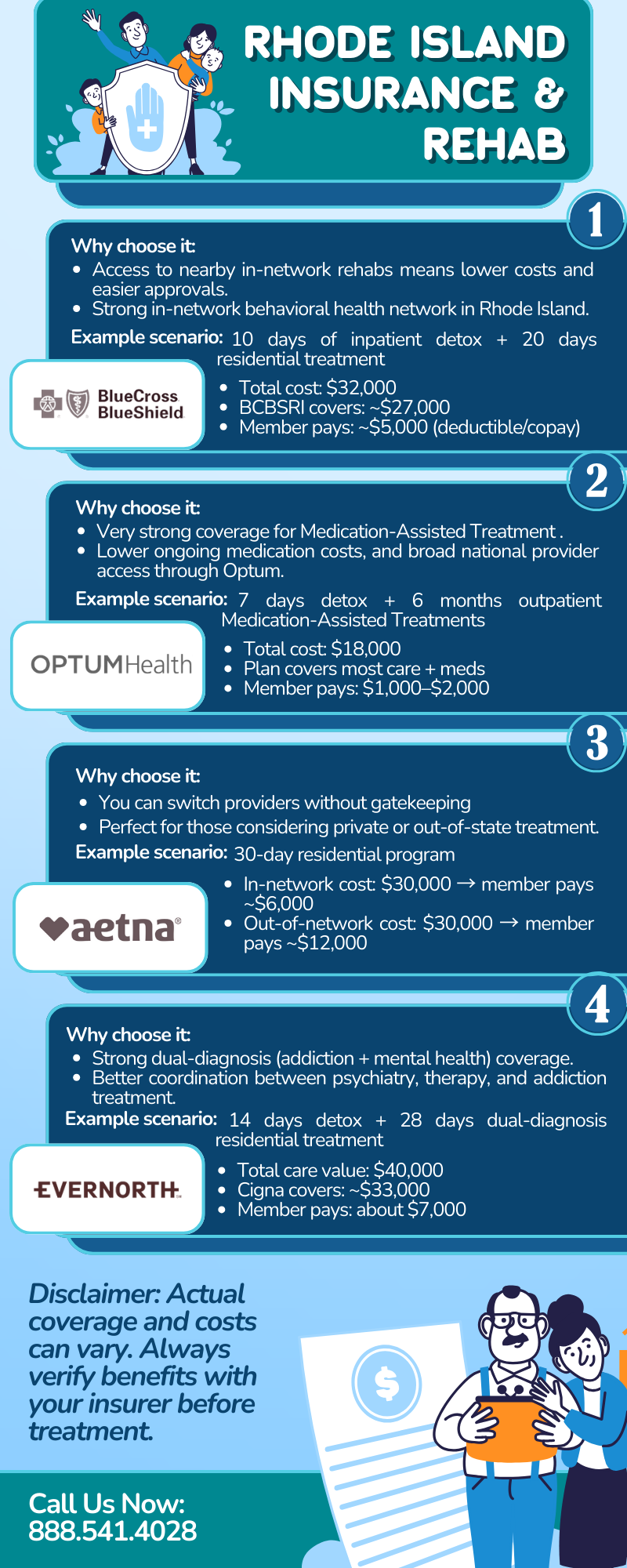
➡️ If you are comparing treatment costs and care options, read our latest blog: “Does Insurance Cover Addiction Treatment In Rhode Island?” to better understand how insurance may affect your path to recovery.
Treatment Quality, Daily Care, And Long-Term Recovery
The next big piece in free vs private rehab in Rhode Island is treatment quality. Not just whether therapy exists on paper, but what the day really looks like once a person walks through the door.
Some state-funded programs focus first on stabilization and basic support. That can help, especially in a crisis. Private programs often add more layers, such as trauma therapy, family work, medication support, and deeper aftercare planning.
Basic Care Vs More Focused Care
A lower-cost program may rely more heavily on group sessions, shorter check-ins, and limited treatment tracks. That is not always a flaw. Group work can be powerful, and plenty of people do well in public programs.
Still, people with trauma, depression, anxiety, or repeated relapse may need more than core services. They may need Expert drug detox RI, medication-assisted treatment, regular one-on-one counseling, and care for both substance use and mental health at the same time.
Why Personal Fit Matters
Think of treatment like shoes. If they are the wrong size, you can still walk, but every step feels harder than it should. The same is true in rehab. A person who needs quiet space, private therapy, and careful medication management may struggle in a crowded setting built around group-only work.
Private programs often give more room for that kind of fit. They may offer lower census, more clinician time, and care plans that adjust as the person changes. That can be especially helpful for people who need support beyond basic stabilization.
How To Choose The Right Rehab In Rhode Island
By the time families reach this stage, they are usually tired. They want a clear answer. Which one is better? The honest answer is that the “right” choice depends on urgency, budget, insurance, clinical needs, and how much structure a person needs to stay in treatment.
Still, a few questions can make the choice clearer. If you ask them early, you can avoid wasting time and energy on a program that looks good online but does not fit real life.
Questions Worth Asking
- How quickly can admission happen?
- Is detox available on-site or through a referral?
- How much one-on-one therapy is included each week?
- Is medication-assisted treatment offered?
- Can the program treat trauma, anxiety, or depression too?
- What happens after discharge?
- Are family sessions part of care?
- What are the real out-of-pocket costs?
These questions help cut through the sales talk. They also show the difference between a program that simply processes people and one that actually pays attention.
A Simple Way To Think About It
Choose free rehab when cost is the main barrier and you need a safe place to start. Choose private rehab when you need quicker access, more personal therapy, more privacy, or a broader level of clinical care.
That does not make one path noble and the other fancy. It just means recovery is personal. Some people need the safety net. Others need a setting with more time, space, and direct support. And some move through both – starting with one and stepping into the other as life changes.
If you are weighing free vs private rehab in Rhode Island, do not settle for rushed treatment or vague answers. Ask what care really looks like day to day. Ask how long therapy lasts. Ask who will still be there after detox ends.
Rhode Island Addiction Treatment Centers can help you review insurance, explain costs, and talk through what level of care fits your needs. Don’t settle for five minutes of care.
Contact Rhode Island Addiction Treatment Centers for a confidential insurance verification and take the first step toward a new life.