
Recovery After Dark: Evening IOP Programs in RI
Consider the facts.
You woke up this morning and did what you always do. Made coffee. Found your keys. Showed up. You were present for the meeting, cordial at lunch, and functional in every way that the daytime demands of a person. No one at the office would guess. You have become, through considerable effort, very good at the hours the world can see.
It is the other hours that concern us.
Five o’clock arrives. The structure that held the day together begins to dissolve. The drive home is quiet. The apartment is quieter. Thursday evening opens up in front of you like a room with no furniture in it, and somewhere in that emptiness lives the thing you have been outrunning since morning.
This is not a dramatic observation. It is a clinical one. The hours between the end of work and the beginning of sleep are, for a very specific population of people in Rhode Island, the most dangerous hours of the day. An evening IOP does not ask you to rearrange your life around treatment. It arranges treatment around the part of your life that most needs it.
The game, as they say, is on.
The Overlooked Geography of Addiction
Most conversations about treatment focus on what IOP treats. This one focuses on when the real fight happens.
Boredom and isolation are among the most consistent relapse triggers in early recovery. The habit did not live at work. It lived at home, in the evening, in the gaps, and the brain learned to associate that unwinding hour with use. That association does not dissolve because a person decides to get better. It waits.
A program that ends at noon sends a person back into those hours unequipped. An evening IOP occupies the battleground directly, with sessions typically running three to four hours across three to five evenings per week beginning around five or six o’clock. That is not a scheduling convenience. That is a clinical decision to show up precisely when the case gets difficult.
There is something else worth saying here. When someone attends an evening program, they go to group on Wednesday, drive home through the same neighborhood, and wake up Thursday in the same apartment with the same pressures. What they learned Wednesday gets tested Thursday. No buffer. No transition period. The laboratory and the real world are the same place, and recovery has to work inside it immediately. This is harder than a residential setting. It is also more honest, and for the right person, considerably more durable.
The Person Who Cannot Disappear During the Day
There is a population that the treatment system does not always speak to directly. Employed. Enrolled. Responsible for other people. Struggling in a way that is invisible to almost everyone around them because they have learned to keep it that way.
For this person, residential treatment is not just inconvenient. It is genuinely impossible. Disappearing for thirty days means losing the fragile infrastructure of life they are trying to protect. A flexible rehab schedule in RI is not a lesser form of treatment for this person. It is the only form that does not require destroying part of a life in order to save another part of it.
Being seen by a program before you even walk in the door matters more than most clinical literature acknowledges.
What Happens Inside an Evening IOP
Not all evening rehab programs in Rhode Island are the same, and the difference is more than just how they look. It’s important to know how a good one works.
Cognitive Behavioral Therapy operates on a specific premise: thoughts, feelings, and behaviors exist in a loop, each influencing the others, and the loop can be interrupted.
In addiction treatment, this means identifying automatic thoughts. The fast, reflexive interpretations that arrive before conscious reasoning catch up and examine whether they are accurate.
“I’ve had a hard week; one drink won’t matter” is not a reasonable conclusion. It is a cognitive distortion, and CBT provides an actual skill to use in response to it rather than relying on willpower, which is a limited and unreliable resource.
Dialectical Behavior Therapy adds a dimension CBT alone does not always reach. The system operates on the principle that two contradictory things can exist simultaneously as true. You can accept where you are and still work to change it.
DBT delivers four skill modules that include mindfulness and distress tolerance and emotion regulation and interpersonal effectiveness.
Distress tolerance in particular addresses what to do in the immediate moment when the urge is present and strong, and the cognitive tools feel miles away.
The program teaches crisis survival skills that people can use without understanding their problem’s core issue; they only need to survive through the next hour without following their impulse.
Group therapy, in a quality program, is not a feelings circle. It is a structured environment in which peer identification breaks down the denial and isolation that sustain addiction.
It is harder to believe your situation is uniquely beyond help when you are sitting across from someone who has similar thinking patterns.
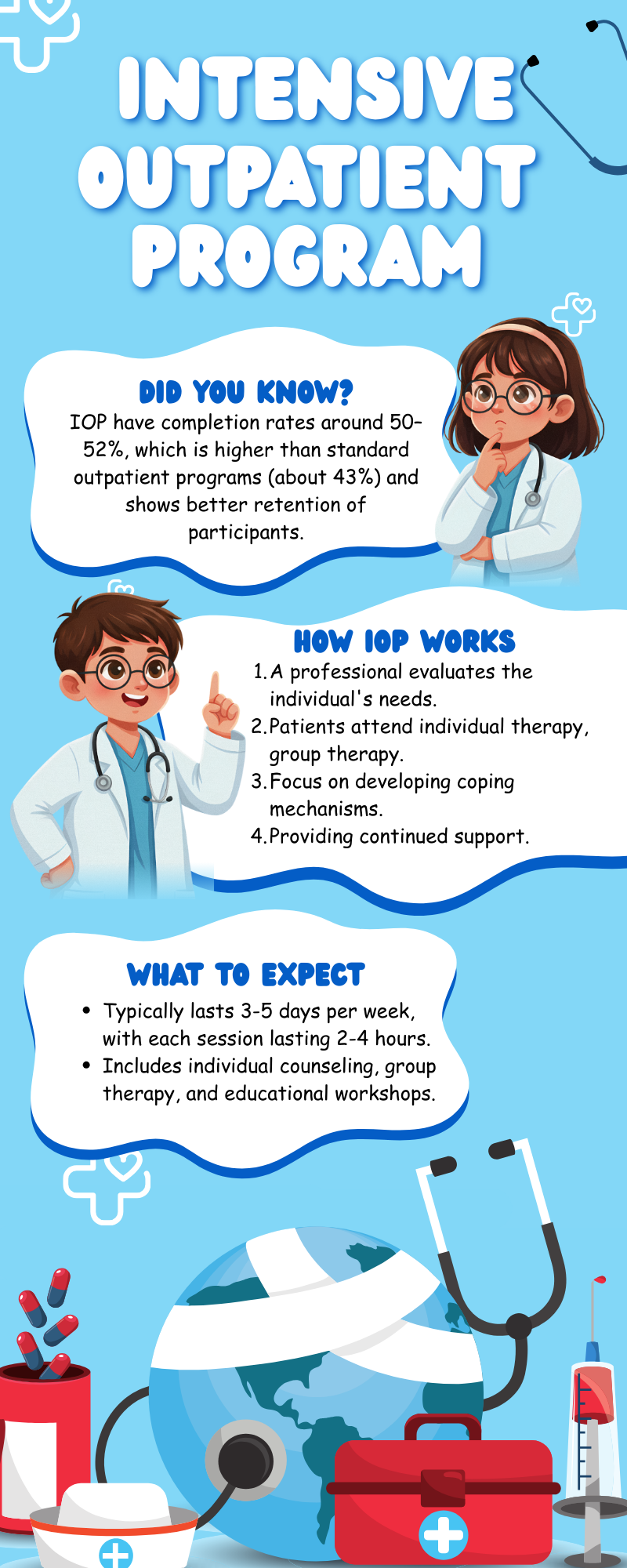
Individual therapy goes where groups cannot: the specific, the personal, and the co-occurring depression or anxiety or trauma that frequently drives substance use. And, if left unaddressed, will continue to drive it long after the group sessions end.
Some Battles Happen After Dark
There is a version of this person who never finds the right program. Not because they stopped trying, but because every option asked them to choose between getting better and keeping their life.
There is another version who finds out that the hours that were hardest are the hours that finally got addressed. Who attends an evening IOP in Rhode Island, drives home through familiar streets, and wakes up the next morning with something new: a skill built in real time, tested in real conditions, inside the actual life they were trying to protect.
Struggling with addiction or co-occurring mental health challenges in Rhode Island? An evening IOP at Rhode Island Addiction Center may be the structure that makes getting help possible without dismantling the life you’ve built. Reach out to find out if it’s the right fit.