
10 Questions to Ask a Dual Diagnosis Drug Rehab in Rhode Island
When addiction and mental health cross, treatment gets more complicated.
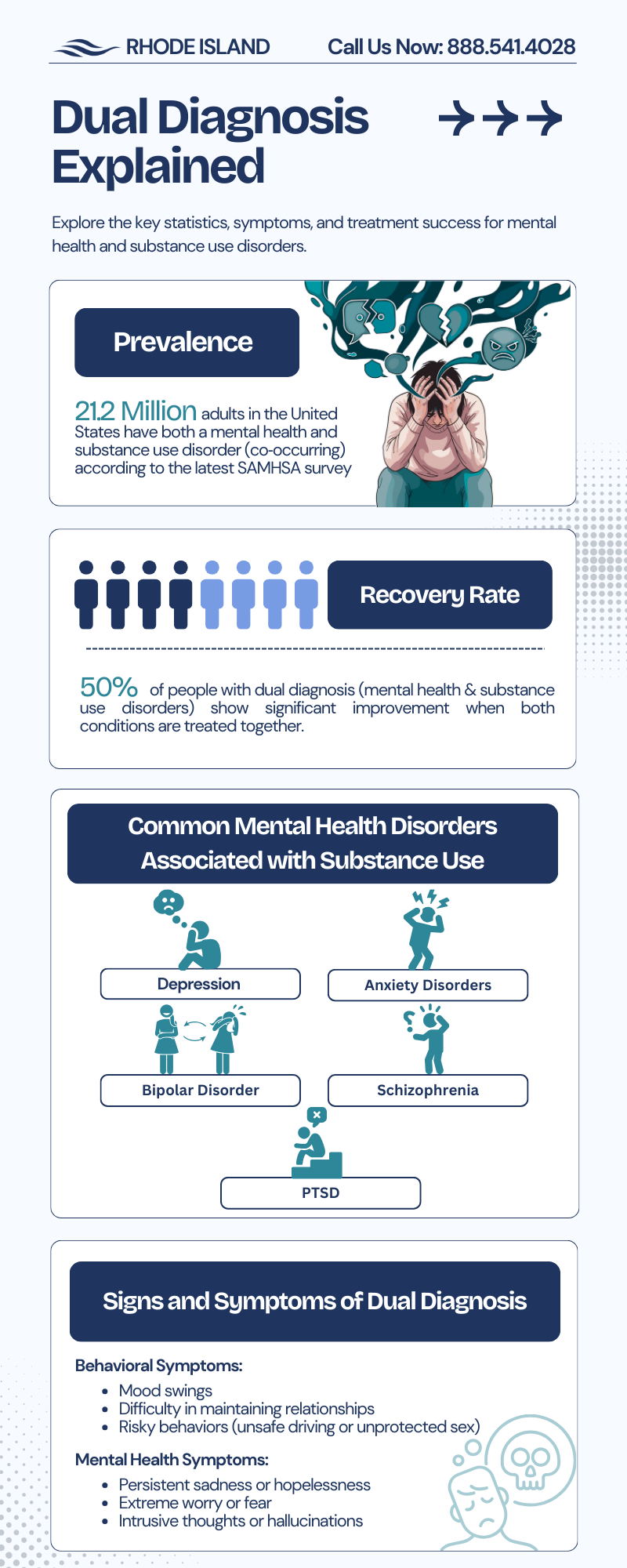
Someone may enter rehab for drug use. However, underneath the substance use, there may be anxiety, depression, trauma, bipolar disorder, or another mental health condition driving the cycle. If both issues aren’t treated together, recovery often doesn’t last.
That’s why choosing the right dual diagnosis drug rehab in Rhode Island matters. Not every program treats mental health care alongside addiction treatment. Some programs offer mental health care as an extra service. Others keep the two completely separate.
Before getting into a program, here are 10 important questions to ask, and why they matter.
1. Do You Treat Addiction and Mental Health at the Same Time?
This is the most important question to start with.
Some facilities only offer mental health services but treat substance use first and address mental health later. This approach can leave gaps. If anxiety, trauma, or depression is fueling drug use, ignoring it early can increase relapse risk.
A strong dual diagnosis program creates one integrated treatment plan from day one. Therapy sessions should explore how mental health symptoms and substance use interact, rather than treating them as separate problems.
2. What Mental Health Conditions Do You Have Experience Treating?
Not everyone can treat dual diagnosis; it requires specific expertise.
Ask what conditions the program treats and how often. Experience is important, especially for complex issues like PTSD, bipolar disorder, or personality disorders.
The more the clinical team understands your specific condition, the better and more effective your treatment will be.
3. Are Licensed Mental Health Professionals Actively Involved?
True dual diagnosis rehab includes licensed mental health therapists as part of the team. This may include psychiatrists, psychiatric nurse practitioners, or licensed therapists with advanced training in mental health disorders.
Ask how often psychiatric evaluations are available and whether medication management is offered if needed. Integrated care means that addiction counselors and mental health providers talk to each other regularly and work together on treatment decisions.
4. How Is Medication Handled?
Medication can play an important role in stabilizing mental health symptoms, but it should never replace therapy.
If you’re already taking medication, ask how it will be reviewed and monitored. If they recommend a new medication, ask how decisions are made and how side effects are tracked. A thoughtful program approaches medication carefully and adjusts it based on progress.
5. What Happens if Mental Health Symptoms Intensify?
Early recovery can feel quite overwhelming. Without substances to numb feelings, anxiety or depression may temporarily feel stronger.
Ask how the program responds if symptoms escalate. Do they have crisis protocols in place? Is psychiatric support available quickly? Does the team adjust treatment plans when emotional shifts occur?
Dual diagnosis rehab should anticipate emotional fluctuation rather than react to it late.
6. How Is Trauma Addressed?
Many individuals struggling with addiction have unresolved trauma.
Trauma therapy needs careful handling, especially during early sobriety. First, find out if the program uses trauma-informed approaches and if they introduce trauma work gradually. Jumping into deep trauma work too quickly can upset someone who is still adjusting physically and emotionally.
However, completely ignoring trauma can leave untreated root causes. A balanced approach is essential.
7. How Do You Determine the Right Level of Care?
Dual diagnosis treatment may occur in detox, inpatient care, intensive outpatient programs, or standard outpatient therapy. The appropriate level depends on the severity of substance use and mental health stability.
Ask how the team decides what level of care is right for you. The answer should be based on clinical assessment, not insurance coverage alone or availability of beds.
8. How Do You Prevent Relapse When Mental Health Symptoms Return?
Relapse prevention must include emotional relapse, not just drug relapse.
Anxiety spikes, depressive episodes, or trauma reminders can trigger cravings even after weeks of sobriety. Ask how they teach clients to recognize emotional warning signs and separate mood fluctuations from urges to use.
Strong dual diagnosis treatment equips clients with coping strategies that address both mental health flare-ups and substance cravings.
9. Is Family Involvement Part of the Process?
Addiction and mental health struggles affect families deeply.
Ask whether family therapy or education is available. Loved ones often need guidance on communication, boundaries, and understanding co-occurring disorders. Involving family can improve long-term outcomes and reduce misunderstanding.
10. What Does Long-Term Support Look Like?
Dual diagnosis recovery doesn’t end when a program does.
Ask about step-down options, ongoing therapy, medication follow-ups, and relapse prevention planning. Recovery is a long-term process, and continuing treatment matters. Programs that focus on aftercare planning show a commitment to stability beyond short-term treatment.
Why Are These Questions Important?
Dual diagnosis drug rehab in Rhode Island should feel coordinated and intentional.
Mental health conditions and substance use often foster each other. Someone may use drugs to manage anxiety. Over time, drug use worsens anxiety. And the cycle goes on.
If treatment addresses only addiction, mental health symptoms can pull someone back into use. If treatment focuses only on mental health, cravings may go unmanaged.
Integrated care breaks this cycle.
Dual Diagnosis Treatment at Rhode Island Addiction Treatment Centers
At Rhode Island Addiction Treatment Centers, dual diagnosis treatment is built around collaboration and integration. Addiction specialists and mental health therapists work together to create a single, coordinated treatment plan rather than treating each issue separately.
Care typically includes:
- Integrated treatment planning
- Psychiatric evaluation and medication management
- Individual and group therapy
- Trauma-informed approaches
- Relapse prevention for co-occurring disorders
Final Thoughts
Choosing a dual diagnosis drug rehab in Rhode Island is a serious decision. The right questions can reveal whether a program really integrates care or simply markets it.
Addiction rarely exists alone. When mental health is part of the picture, treatment must be tailored to it.
If you or someone you know is suffering from both substance use and mental health challenges, start with a conversation. Ask these questions. Get clarity. Make sure the care matches the need.
Recovery becomes easier when both sides of the issue are treated together!