What Drug Detox in Rhode Island Really Looks Like: Jason’s Story
Here’s the story of Jason. A 34-year-old, married man, working in construction. When he agreed to enter drug detox, he wasn’t confident. He was exhausted!
He had started with prescription painkillers after an injury. Over time, the prescriptions ran out, but the dependence didn’t.
He had tried stopping before. But each time, withdrawal hit hard! Sweating, restlessness, anxiety, body aches, and insomnia.
The last time, he lasted 36 hours before using again.
However, this time was different!
This time, he chose professional drug detox in Rhode Island.
Here’s how the process unfolded at Rhode Island Addiction Treatment Centers, step by step.
Step 1: The Call That Changed The Direction
Jason didn’t call, saying, “I need rehab.”
He said, “I can’t keep doing this.”
The admissions team at Rhode Island Addiction Treatment Centers didn’t pressure him. They simply asked about:
- What he was using
- How often
- When he last used
- Past withdrawal experiences
- Medical history
The goal wasn’t judgment; it was safety. And within hours, a detox plan was forming.
Step 2: Intake and Medical Assessment
When Jason arrived, detox didn’t begin immediately with medication. It began with an assessment.
Our medical staff evaluated:
- Heart rate and blood pressure
- Substance history
- Risk for severe withdrawal
- Mental health symptoms
- Previous detox attempts
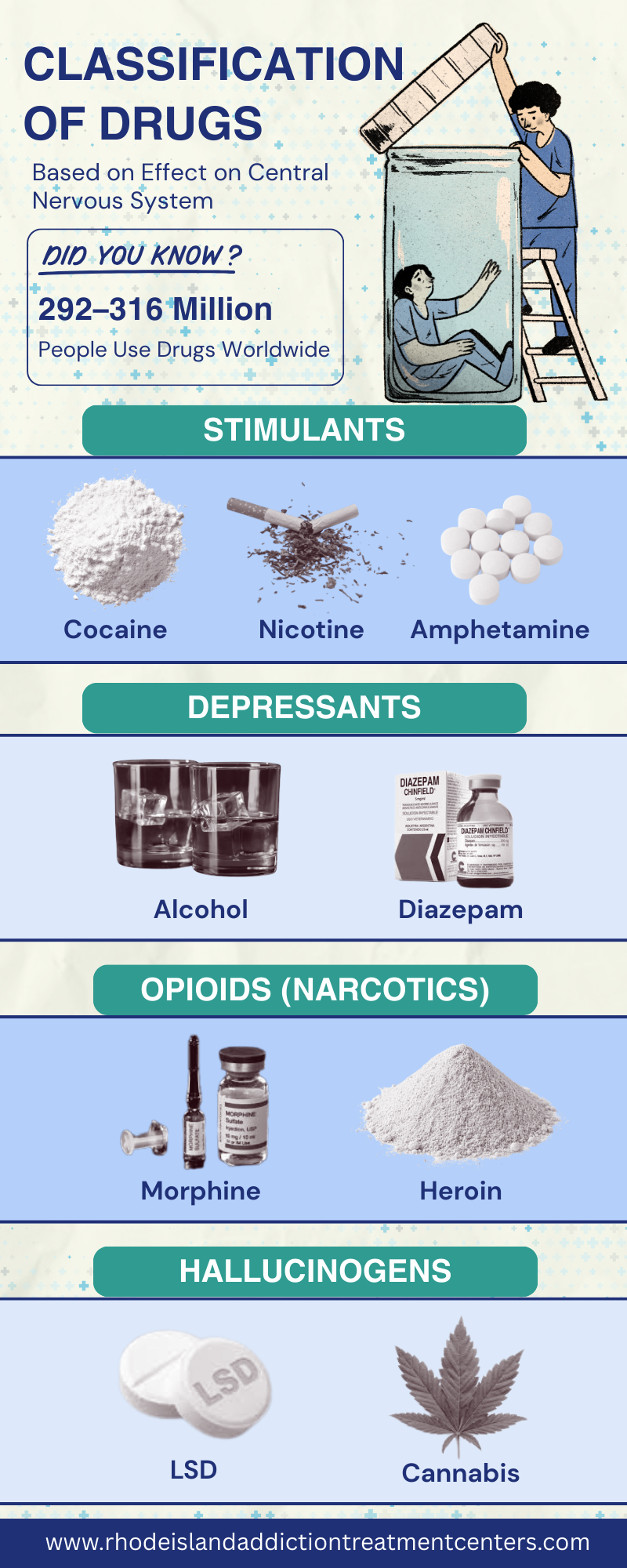
Drug detox is not the same for everyone. Opioids, benzodiazepines, stimulants, and other substances all produce different withdrawal patterns.
Using this evaluation, we were able to determine how his detox would unfold.
Step 3: Stabilization Begins
The first 24 hours were about stabilization.
- Jason was monitored closely
- His vitals were checked regularly
- Medication was introduced carefully to reduce discomfort and prevent complications
He expected chaos. Instead, there was structure.
He wasn’t alone in his symptoms. Our staff knew what might happen before it happened, and this predictability reduced panic.
Step 4: The Physical Withdrawal Phase
For Jason, days 2 and 3 were the hardest.
Opioid withdrawal brought:
- Muscle aches
- Chills
- Sweating
- Nausea
- Restlessness
- Strong cravings
Drug detox in Rhode Island isn’t about toughing it out. At RIATC, we introduced medications to ease symptoms and prevent escalation.
Our team encouraged him to hydrate, rest, and tell us about any discomfort. We made adjustments in real time.
The key difference from his at-home attempts?
Monitoring!
Withdrawal can shift quickly, and medical supervision ensures those shifts are managed safely.
Step 5: Emotional Withdrawal
What surprised Jason most wasn’t physical pain; it was emotion.
Without substances”
- Anxiety felt sharper
- Guilt surfaced
He worried about work, about his marriage, and about what came next.
Detox doesn’t just clear drugs from the body. It exposes feelings that substances were masking.
At Rhode Island Addiction Treatment Centers, our staff checked in not just physically, but emotionally. We began support conversations early, even before formal therapy started.
This support helped prevent Jason’s urge to leave before any progress happened.
Step 6: The Turning Point
Around day 4, the intensity shifted.
Sleep improved slightly, cravings remained, but the physical edge softened. His thinking felt clearer than it had in months.
This is often a critical moment in drug detox.
When the worst physical symptoms pass, your motivation strengthens, or your fear about the next step grows.
Because detox alone is not treatment.
Step 7: Transition Planning
Before completing detox, Jason met with one of our team members to discuss next steps.
His options included:
- Inpatient residential treatment
- Intensive Outpatient Program
- Standard outpatient care
Since relapse risk was high and his home environment still included triggers, we recommended a structured next step.
The key was continuity. Without follow-up care, relapse risk increases significantly.
Why Is Drug Detox at Rhode Island Addiction Treatment Centers Different?
Jason had tried to quit before. However, this time, the difference wasn’t willpower; it was structure.
At Rhode Island Addiction Treatment Centers, drug detox includes:
Medical Supervision
We monitor vital signs and symptoms continuously to prevent complications.
Medication-Assisted Support
We use medications when appropriate to reduce withdrawal severity and improve comfort.
Emotional Check-Ins
Detox can be mentally overwhelming. We provide early support to reduce isolation and panic.
Seamless Transition to Ongoing Treatment
We begin planning before detox ends, minimizing the risk of relapse during treatment.
Why Detoxing Alone Is Risky?
Many individuals attempt drug detox at home to avoid stigma or cost.
But detoxing without supervision can lead to:
- Dehydration
- Severe anxiety
- Medical complications
- High relapse risk
- Dangerous withdrawal symptoms (depending on substance)
More importantly, discomfort often drives people back to use quickly. On the other hand, medical detox doesn’t eliminate the discomfort, but makes it safer and more manageable.
The Outcome?
Jason completed detox.
He transitioned into structured treatment. For the first time, his recovery plan didn’t end when symptoms stopped.
Months later, he described detox not as “the worst week of his life,” but as the week he stopped fighting his body alone.
Drug detox in Rhode Island is about stabilization. It creates the physical and mental clarity needed for deeper recovery.
Take a Step Towards Drug Detox in Rhode Island
Drug detox is often the most intimidating part of recovery, not because it’s impossible, but because it’s unknown.
Trying to quit alone can feel unpredictable and overwhelming. Withdrawal symptoms can escalate quickly depending on the substance, and discomfort often leads people back to substance use before their body has a chance to stabilize.
At Rhode Island Addiction Treatment Centers, drug detox is medically supervised, structured, and designed around safety from the first hour.
You’ll know what to expect, you’ll be monitored closely, and you won’t have to manage symptoms by yourself.
If you’re considering stopping drug use, don’t wait for things to get worse. A simple call can help you understand whether detox is necessary and what the safest next step looks like.
Reach out today to speak with our admissions specialist.
The first step toward stability starts with clarity, and we are here to guide you!