
Does Insurance Cover Addiction Treatment In Rhode Island?
“Getting help for addiction should feel like opening a door, not hitting a wall.”
If you are asking, Does insurance cover addiction treatment in Rhode Island, the short answer is yes, in many cases it does. State and federal rules often require health plans to cover substance use care in a way that is closer to medical care, not pushed aside like an extra.
That matters because real recovery often starts with one practical question: can I afford treatment? Rhode Island has made real progress, including a reported 25% drop in overdose deaths since 2022, which points to better care, stronger policy work, and faster access to help.
At Rhode Island Addiction Treatment Centers, we help people sort through Rhode Island addiction treatment insurance coverage every day. This guide explains the laws, the plans, the common services covered, and the steps you can take so that money questions do not keep you stuck in place.
Mental Health Parity, under the Mental Health Parity and Addiction Equity Act, means insurers must treat addiction and mental health care more like medical and surgical care. That rule helps stop unfair limits, higher barriers, or weaker access for people seeking treatment.
Understanding The Laws: How Rhode Island Protects Your Right To Care
Insurance can feel like a maze, especially when you are already under stress. The good news is that both federal and Rhode Island rules give people more protection than many families realize at first.
So, when people ask, Does insurance cover addiction treatment in Rhode Island, the answer usually starts with the law. These rules do not fix every problem, but they do give patients a stronger place to stand.
Federal Parity Act (MHPAEA)
The Mental Health Parity and Addiction Equity Act says insurers cannot treat addiction care as less worthy than medical care. In other words, that means a plan should not place tougher rules on substance use treatment than it places on surgery, diabetes care, or hospital visits.
That matters for things like visit limits, pre-approval rules, and out-of-pocket costs. If a plan covers medical treatment in a certain way, addiction treatment should be handled with similar fairness. That is the heart of parity, and it gives families real ground to push back when something feels off.
Rhode Island Specific Laws
Rhode Island has also passed state-level protections, including the Protect Mental Health Act. That law strengthens parity rules at the state level and helps line up local standards with federal ones, which gives patients added support when they need care for addiction or mental health concerns.
Think of it like adding guardrails to a steep road. The federal rule sets the direction, and the state rule helps keep insurers from drifting away from fair coverage. For many families, that extra layer can make a big difference.
The ASAM Criteria In Rhode Island Law
Rhode Island law also gives weight to the ASAM Criteria, which many treatment providers use to decide the right level of care. That means insurers should not casually deny ongoing treatment when a provider can show that a person still needs support.
This is a big deal because addiction recovery rarely moves in a straight line. Some people need detox, then residential care, then outpatient care. Others need a slower path. The law helps treatment decisions stay closer to clinical judgment instead of pure cost-cutting.
Common Insurance Providers In Rhode Island For Addiction Treatment
Most major plans in Rhode Island offer some form of rehab insurance Rhode Island coverage. What changes from one plan to another is the amount covered, the treatment levels included, and the network rules attached to that plan.
That is why two people with the same insurer can still have different answers. One plan may cover residential rehab after pre-approval, while another may cover detox and outpatient care first, then review more intensive treatment later.
Major Providers At A Glance
Provider | Commonly Covered Services | Notes |
Blue Cross Blue Shield of Rhode Island | Detox, residential rehab, outpatient care, IOP | May vary by plan and network status |
UnitedHealthcare / Optum | Detox, inpatient, outpatient, therapy, medication support | Often includes several levels of care |
Neighborhood Health Plan of Rhode Island | Detox, residential support, outpatient treatment | Often used by members seeking local care |
Aetna, Cigna, Tufts Health Plan | Detox, rehab, therapy, outpatient programs | Coverage depends on plan details |
Blue Cross Blue Shield Of Rhode Island (BCBSRI)
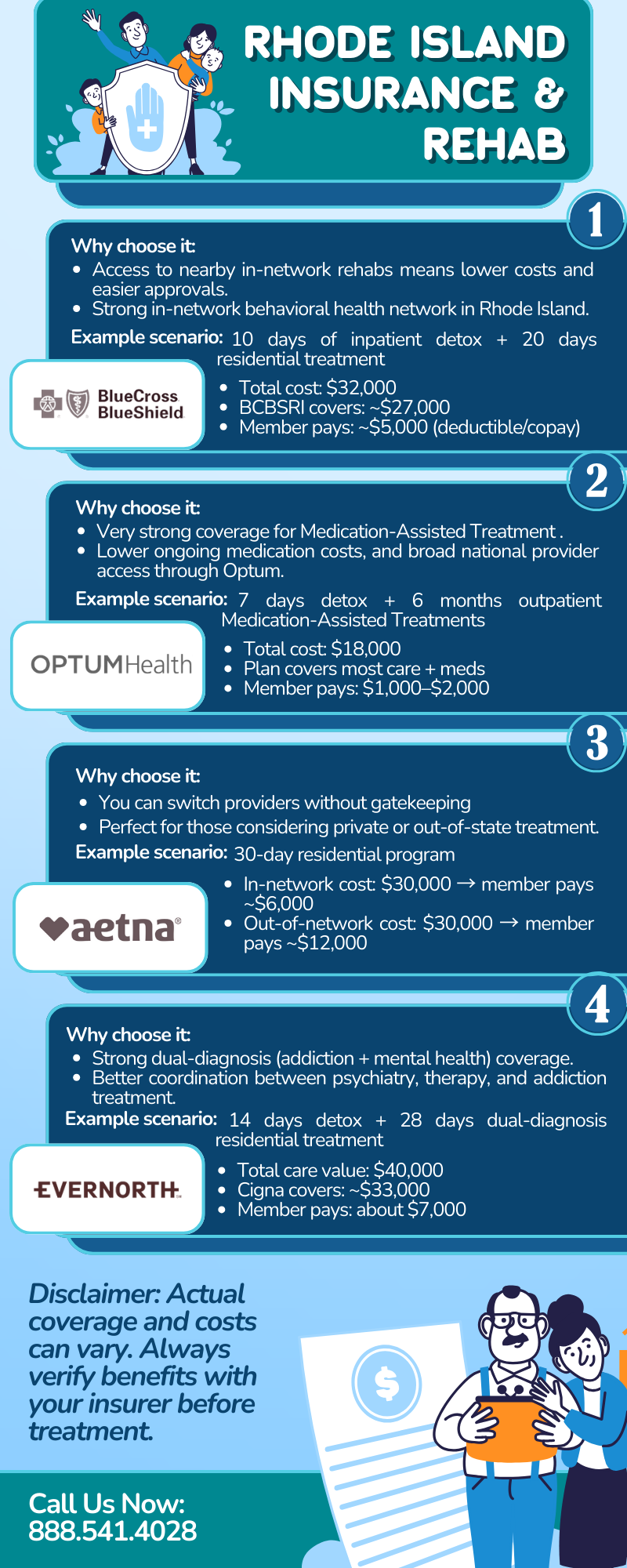
Many people first ask about Blue Cross Blue Shield Rhode Island rehab coverage because it is a common plan in the state. BCBSRI may cover detox, inpatient rehab, outpatient care, therapy, and medication-related treatment, though the exact terms depend on the policy.
Some plans ask for pre-approval. Some use in-network rules. Some have deductibles that change how much you pay upfront. That is why reading the card alone is rarely enough. The fine print matters, and it can change the full picture.
UnitedHealthcare, Neighborhood, And Others
UnitedHealthcare, often working through Optum, may cover several levels of addiction care, from detox to outpatient support. Neighborhood Health Plan of Rhode Island is also a key name, especially for people looking for local options with stronger access to community-based care.
Aetna, Cigna, and Tufts Health Plan are also widely accepted at many treatment centers. In most cases, the real question is not whether the company ever covers care. It is which level of care your specific plan approves, and under what terms.
Does Rhode Island Medicaid Cover Addiction Treatment?
For many families, Rhode Island Medicaid for addiction treatment is one of the most important coverage paths. Medicaid can help people get care when private insurance is not available, too limited, or tied to costs that feel out of reach.
So yes, when people ask, Does insurance cover addiction treatment in Rhode Island, Medicaid is often a big part of that answer. It can open the door to treatment that might otherwise feel impossible to reach.
Eligibility And Application
People can usually apply through HealthSource RI or the Rhode Island Department of Human Services. The process may look a little dry on paper, but it is really about one simple thing: getting people into care before things get worse.
You will usually need personal details, income information, and household data. If that sounds tiring, that is normal. Many treatment centers help people work through these steps, because paperwork should not stop someone from getting help.
Services Medicaid May Cover
Rhode Island Medicaid may cover medical detoxification, medication-assisted treatment, residential rehab, inpatient care, and Intensive Outpatient Programs (IOP). It may also cover therapy and care for people with dual diagnosis needs, where addiction and mental health issues happen at the same time.
That kind of support matters because addiction rarely travels alone. A person may be dealing with anxiety, depression, trauma, unstable housing, or job trouble all at once. Good coverage helps treat the full picture, not just one piece of it.
Case Study
In a 2025 WebMD report, Lacy Sisk, 40, described losing control of her opioid use to the point that her family had to pack up their home because she could no longer pay the rent.
During a hospital visit, she met a life care specialist who listened to her concerns, explained treatment choices, and connected her with a program that included monthly naltrexone injections and ongoing support.
Six months later, Sisk was still opioid-free and staying connected to recovery care. Her story shows how timely treatment, clear guidance, and follow-up support can turn a frightening crisis into a real path forward.
What Types Of Addiction Treatment Does Insurance Typically Cover In Rhode Island?
When people ask, Does insurance cover addiction treatment in Rhode Island, they are often really asking what kind of care a plan may pay for. The answer usually depends on medical need, plan rules, and provider network status.
Still, many plans cover more than people expect. Coverage often includes several levels of care, which helps patients move from one stage of treatment to another without starting from scratch each time.
Commonly Covered Treatment Types
- Medical detoxification with 24/7 monitoring.
- Residential and inpatient treatment for people needing full-time care.
- Outpatient and IOP for people balancing treatment with daily life.
- Dual diagnosis treatment for substance use and mental health care together.
- Medication-related treatment and follow-up therapy.
Why Different Levels Matter
Detox helps the body settle safely. Residential care gives people a full-time setting when home life is too unstable or risky. Outpatient care and IOP help people work on recovery while still handling daily responsibilities like work, school, or family duties.
It is a bit like learning to ride a bike again after a long break. Some people need training wheels first. Some need someone running beside them for a while. Good insurance makes it easier to match the support to the person.
For a clearer look at who may need a higher level of daily support than standard outpatient care, read our latest blog: “What Is a Partial Hospitalization Program, and Who Is It For?”
How To Verify Your Insurance For Addiction Treatment In Rhode Island
The fastest way to sort out Rhode Island addiction treatment insurance coverage is to contact the treatment center directly. A good admissions team can often check your benefits, explain what the plan may cover, and walk you through the next steps.
This can save time, lower stress, and help you avoid surprises. It can also help you see the real costs, not just the scary ones your mind may jump to at 2 a.m. when everything feels bigger than it is.
Three Simple Steps
- Contact the facility and ask for an insurance check.
- Ask about deductibles, copays, and coinsurance.
- Find out if pre-approval is needed for your level of care.
What Pre-Authorization Means
Pre-authorization means the insurer wants clinical information before approving some services. That may sound frustrating, and sometimes it is, but treatment centers often help gather the needed records so you are not left doing all the heavy lifting alone.
Overcoming Insurance Denials And The Appeals Process
A denial is not always the end of the road. Sometimes it means the insurer wants more records, more detail, or a different level of care reviewed first.
That is why families should not panic at the first “no.” Many denials can be challenged, especially when a provider can show strong clinical reasons for the requested treatment.
Know Your Rights
Rhode Island’s parity work gives families stronger ground when fighting unfair denials. If a plan is treating addiction care more harshly than medical care, that may raise serious questions under parity rules.
Get Help With Appeals
Our team at Rhode Island Addiction Treatment Centers helps families appeal denials by gathering records, sharing clinical notes, and explaining why a certain level of treatment is still needed. That kind of support can take some of the pressure off when emotions are already running high.
Conclusion: Your Path To Recovery Starts Here
If you have been wondering, Does insurance cover addiction treatment in Rhode Island, the answer is often yes, and that matters more than many people realize. Insurance should be a bridge to care, not a locked gate that keeps people standing outside.
Recovery can feel overwhelming at first. Bills, phone calls, and plan details can make it harder. Still, you do not have to sort through all of that on your own. Rhode Island Addiction Treatment Centers can help you check your coverage, explain your options, and point you toward the right level of care.
Don’t let insurance confusion stop you.
Contact Rhode Island Addiction Treatment Centers today for a confidential insurance verification and take the first step toward a new life.