
What Alcohol Rehab in Rhode Island Is Really Like (From Detox to Aftercare)
Most people don’t search for alcohol rehab in Rhode Island out of curiosity. They search because something isn’t working anymore!
Maybe drinking has started to feel less like a choice and more like a pattern. Maybe promises to cut back haven’t lasted. Maybe there’s a quiet thought in the back of your mind asking, “What would it look like if I actually got help?”
But that question quickly leads to many other questions:
Will it be overwhelming?
Will I lose control over my life?
Will it actually make a difference?
Alcohol rehab isn’t a big, dramatic moment; it’s a steady process. It starts with stabilizing the body, moves on to understanding the reasons behind drinking, and continues with real-life support that lasts beyond treatment.
When it’s done right, it doesn’t feel like punishment or isolation. It feels structured, supported, and grounded.
Here’s what alcohol rehab in Rhode Island Addiction Treatment Centers really looks like, from the first day of detox through long-term recovery.
Step 1: Alcohol Detox – The First Stage of Stabilizing
For most alcoholics, treatment begins with detox.
Alcohol withdrawal can be uncomfortable and, in some cases, medically risky. That’s why detox is often supervised by medical professionals. The goal during this stage is simple: stabilize the body safely and as comfortably as possible.
During detox, you can expect:
- Medical monitoring
- Support for withdrawal symptoms
- A proper clinical environment
- Reassurance during a vulnerable time
Detox usually lasts several days, depending on how long and how heavily someone has been drinking. It’s not therapy yet; it’s preparation. It creates a stable foundation so real recovery work can begin.
At Rhode Island Addiction Treatment Centers, we provide detox with close medical supervision and care. We focus on ensuring safety, comfort, and dignity during this tough transition
Step 2:
Inpatient or Residential Rehab – Building Structure
After detox, many people move into inpatient or residential treatment.
This stage is about structure. The days are scheduled, therapy sessions are regular, and meals and activities are consistent. This routine helps calm the nervous system and reduce outside distractions.
In inpatient alcohol rehab, you might experience:
- Individual therapy sessions
- Group therapy
- Education about addiction and relapse prevention
- Time for reflection and skill-building
- Peer support from others in recovery
One of the biggest surprises for many people is that inpatient rehab doesn’t feel as intimidating as they imagined.
Instead of chaos, there’s routine.
Instead of judgment, there’s support.
At Rhode Island Addiction Treatment Centers, inpatient programs are designed to help people step away from daily triggers while building emotional skills that carry into real life.
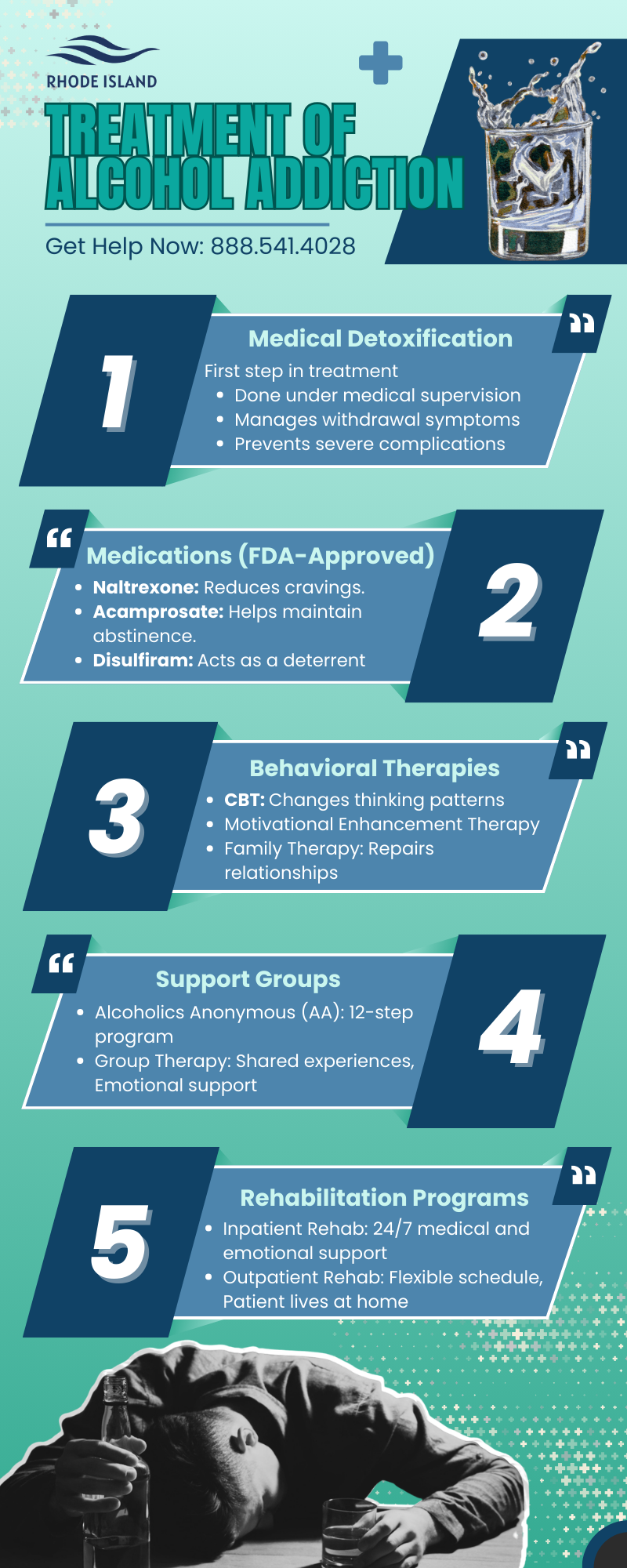
Step 3: Therapy – Understanding the “Why”
Alcohol rehab isn’t just about stopping drinking. It’s about understanding why drinking became a coping tool in the first place.
Therapy focuses on:
- Stress patterns
- Trauma or unresolved experiences
- Anxiety or depression
- Relationship challenges
- Emotional regulation skills
Many people discover that alcohol wasn’t the main issue; it was the way they were trying to manage pain, pressure, or overwhelm.
This stage can feel uncomfortable at times, but it’s also where real clarity begins. When you understand your triggers and patterns, you gain more control over them.
Step 4: Learning Practical Coping Skills
Recovery is not just about understanding your experiences. It is also about how you live your daily life. Good alcohol rehab programs teach practical skills such as:
- How to handle cravings
- How to respond to stress without drinking
- How to rebuild routines
- How to set boundaries
- How to manage social situations
These tools are practiced during treatment, so they feel natural later.
Step 5: Transitioning to Outpatient Care
Not everyone stays in inpatient treatment long term. Many people step down into outpatient programs once they’ve built stability.
Outpatient alcohol rehab in Rhode Island allows people to:
- Return home
- Resume work or school
- Continue therapy several times per week
- Stay connected to support while rebuilding independence
This step-down approach helps ease the transition from full-time treatment to complete independence. It makes the change feel smoother.
At Rhide Island Addiction Treatment Centers, we offer multiple levels of care so treatment can adjust as progress continues. Recovery isn’t one-size-fits-all, and flexibility matters.
Step 6: Aftercare – Protecting Long-Term Recovery
One of the most important parts of alcohol rehab is aftercare. This means that recovery doesn’t end when a program does.
Aftercare planning often includes:
- Ongoing therapy
- Alumni support
- Relapse prevention planning
- Community recovery groups
- Continued accountability
This phase helps protect the progress made during treatment. Many relapses happen not because treatment failed, but because ongoing support stopped too soon.
What Alcohol Rehab in Rhode Island Feels Like Emotionally?
Beyond the structure and therapy, there’s another part people often don’t talk about.
Alcohol rehab can feel:
- Vulnerabl
- Honest
- Challenging
- Hopeful
- Steady
It’s rarely dramatic or sudden. Change tends to happen gradually, confidence builds slowly, and clarity grows over time.
Many people enter rehab feeling ashamed or uncertain. They leave feeling more aware, more grounded, and more capable of handling life without alcohol as their main coping tool.
Is Alcohol Rehab in Rhode Island the Right Step?
If you’re wondering whether alcohol rehab is necessary, you’re not alone. Many people try cutting back first. Some succeed for a while, others find themselves in the same cycle again and again.
Alcohol rehab becomes the right step when:
- Drinking feels difficult to control
- Attempts to cut back haven’t lasted
- Health, relationships, or work are being affected
- Life feels smaller or more chaotic because of alcohol
A Final Thought
Alcohol rehab in Rhode Island isn’t a single moment. It’s a process that begins with stabilization and continues through growth and long-term support.
It’s not about stepping away from life forever, but stepping away long enough to rebuild a healthier way to live it.
If you’re considering alcohol rehab, asking questions is a good place to start. Contact us now, and let us guide you through the process.
Sometimes clarity begins with a simple conversation!