
10 Things to Expect During Alcohol Detox in Rhode Island
Deciding to stop drinking is one thing. Wondering what happens next is something else entirely!
Alcohol detox can be the toughest part of recovery because it focuses on the physical symptoms of withdrawal. People hear stories. They imagine worst-case scenarios. They aren’t sure what’s normal and what’s dangerous.
The reality is that alcohol withdrawal can range from uncomfortable to serious, depending on the person. That’s why medical detox exists. In a supervised setting, the process is structured, monitored, and designed to keep you safe while your body adjusts.
If you’re considering alcohol detox in Rhode Island, here are 10 things you can realistically expect during it.
1. A Medical Assessment Comes First
Before you start the detox journey, you’ll have a friendly intake and medical evaluation to ensure you’re all set!
This usually includes:
- Questions about your drinking history
- A review of your health conditions
- Medication history
- Vital signs and lab work
This step helps the medical team understand your risk level and create a detox plan tailored to you.
And most importantly, everyone’s on the same page. The detox plans are made with care and thoughtfulness.
2. Withdrawal Symptoms Don’t Start Instantly
Once you leave alcohol, you won’t feel anything in the first few hours. The withdrawal symptoms typically begin within 6 to 24 hours after the last drink.
Early symptoms may include:
- Anxiety
- Sweating
- Nausea
- Headache
- Tremors
- Trouble sleeping
However, not everyone experiences severe symptoms. The intensity depends on how much you drink and how long you have been drinking.
3. Medical Monitoring Is Continuous
In a professional detox setting, you’re monitored regularly.
Staff will:
- Check blood pressure and heart rate
- Monitor hydration
- Watch for worsening symptoms
- Adjust medications if needed
This supervision is important because alcohol withdrawal can escalate quickly in some cases.
At Rhode Island Addiction Treatment Centers, we medically supervise detox to reduce risk and improve comfort during the process.
4. Medications May Be Used to Reduce Discomfort
Many people assume detox means white-knuckling withdrawal. That’s not how medical detox works.
Medications may be provided to:
- Reduce anxiety
- Prevent seizures
- Help with sleep
- Ease nausea or agitation
The goal isn’t to sedate you, but to make your condition stable in a safe way.
5. The Most Intense Symptoms Usually Peak Within 24 to 72 Hours
For many individuals, symptoms are strongest during the first 3 days.
This is often when:
- Tremors increase
- Anxiety spikes
- Restlessness intensifies
- Sleep becomes difficult
It can really help to keep this timeline in mind. Just remember, the tough moments won’t last forever.
6. Severe Withdrawal Is Possible (But Managed)
In some cases, people can experience severe withdrawal symptoms, including:
- Hallucinations
- Confusion
- Seizures
- Delirium tremens (DTs)
This is why we strongly recommend medical detox. These complications can be dangerous without supervision, but in a medical setting, they are treated immediately.
If you try to detox alone, the risk increases significantly!
7. You Won’t Be Expected to Do Therapy Right Away
Detox is about physical stabilization. It’s not full therapy yet.
During detox, the focus is:
- Hydration
- Rest
- Safety
- Stabilizing your nervous system
Therapy sessions typically begin after your body has adjusted to alcohol removal. This separation helps prevent overwhelm.
8. You May Feel Emotionally Raw
Alcohol numbs emotions. When it’s removed, feelings can surface quickly.
Common emotional experiences during detox include:
- Irritability
- Sadness
- Anxiety
- Mood swings
This doesn’t mean something is wrong; it simply means your brain is adjusting.
Having support during this period makes quite a difference.
9. Detox Is Short-Term
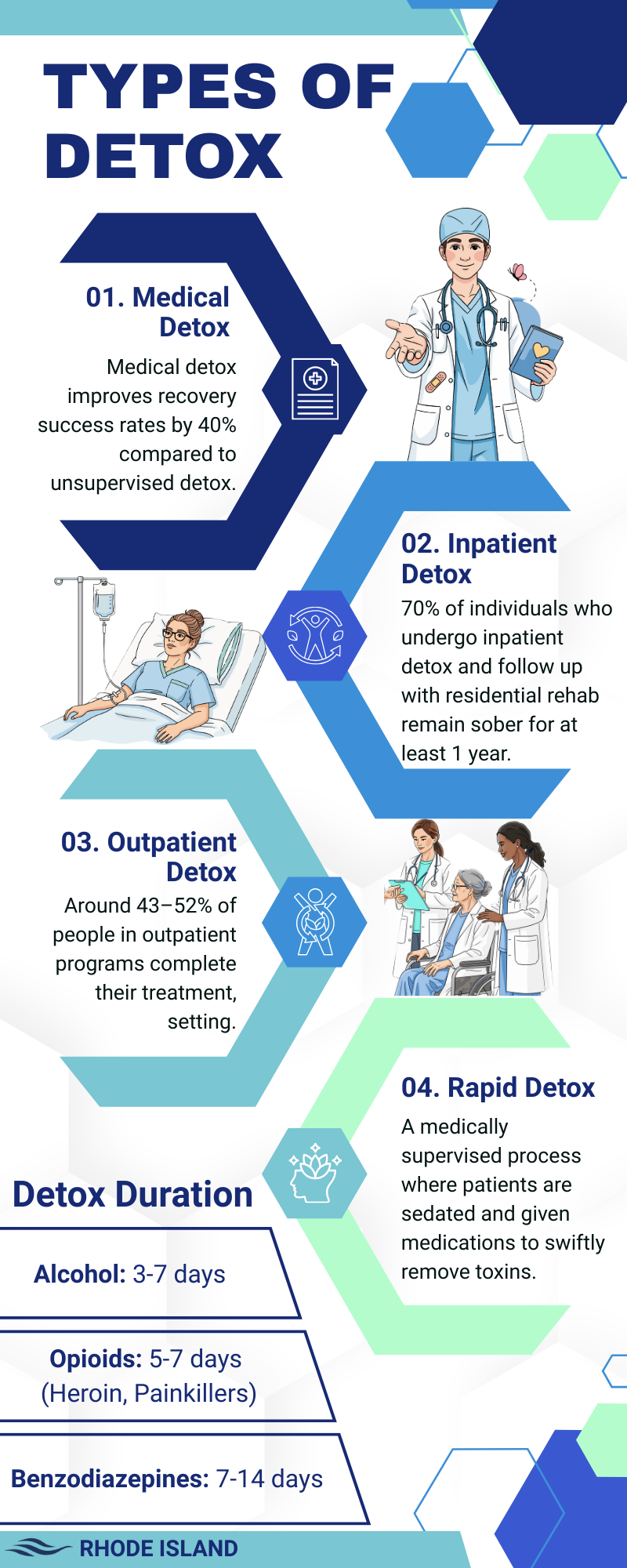
Alcohol detox usually lasts between 3 and 7 days, depending on the individual.
Detox is not a long-term treatment. In fact, we call it the first stage of recovery.
Once stabilized, most people transition into:
At Rhode Island Addiction Treatment Centers, detox is just one part of a complete care program. This means support continues after you finish detox and does not end suddenly after stabilization.
10. Detox Is a Beginning, Not the End
Detox removes alcohol from the body. It does not address the deeper reasons behind drinking.
Recovery continues after detox through:
- Therapy
- Skill-building
- Relapse prevention planning
- Ongoing support
Many people say their fear before starting detox is worse than the detox itself. Once the process begins in a safe setting, uncertainty decreases and understanding increases.
Why Medical Alcohol Detox in Rhode Island Matters?
Alcohol withdrawal can be unpredictable. Even people who have quit before may experience more intense symptoms the next time.
Medical detox reduces:
- Health risks
- Physical discomfort
- The chance of relapse during withdrawal
- Complications from unmanaged symptoms
Rhode Island Addiction Treatment Centers provides medically supervised alcohol detox in Rhode Island with a focus on safety, dignity, and stabilization.
What Alcohol Detox Is Like at Rhode Island Addiction Treatment Centers?
Starting detox can feel intimidating, especially if you don’t know what the environment will be like.
At Rhode Island Addiction Treatment Centers, the focus isn’t just medical stabilization; it’s creating a setting where people feel safe, respected, and supported during a vulnerable time.
- We don’t rush detox. Medical professionals monitor symptoms closely and adjust care as needed.
- The staff understands that withdrawal can feel uncomfortable, both physically and emotionally, so support is steady and consistent.
- We encourage questions. We address concerns directly. Nothing is brushed off.
- The environment is structured but not cold. Clients are given space to rest, hydrate, and begin adjusting without pressure to immediately figure everything out.
The goal is to reduce fear, stabilize the body, and help people move through withdrawal as safely and comfortably as possible.
A Final Thought
If you’re considering alcohol detox in Rhode Island, it likely means you’re ready for change, even if you’re still unsure about the next step.
Detox is not about punishment. It’s about giving your body a safe reset.
Taking the first step is often the hardest, but it helps you build momentum. So, reach out to us today, ask questions, and find out what to expect in this journey!