Detox or Residential Treatment in Rhode Island: How to Know Where to Start
“Recovery Starts With One Honest Conversation.”
But nearly 64 million people around the world suffered from substance use disorders last year, while only 1 in 11 received any treatment at a specialty facility — most leaving the loop unbroken. Still, Rhode Island witnessed an 18.6% decline in drug overdose deaths during the year, to 329 lives lost. But too many people continue to suffer without access to treatment — demonstrating progress is tangible, yet gaps are still enormous.
The first step can be scary, but you don’t have to do it alone. Help is available now, and SAMHSA’s National Helpline is a free, confidential, 24/7, 365-day-a-year treatment referral and information service.
At Rhode Island Addiction Treatment Center, we can help you start detox support or residential treatment with clear guidance and a calm plan. In this article, you will learn the difference between detox and residential care, what happens in the first days, how we choose the safest level of care, and what to do next.
Why Starting Today Matters
Addiction can escalate quickly, and waiting often adds more stress for you and the people who care about you. When cravings, withdrawal, or access to substances stay constant, the cycle can tighten, even when your motivation is real.
Starting today does not mean “forever.” It means one safe step toward stability, comfort, and dignity. With medical supervision and steady withdrawal support, the early days can feel more manageable, especially in a calm setting where you are not fighting triggers alone.
Detox Vs. Residential Treatment: What Is The Difference?
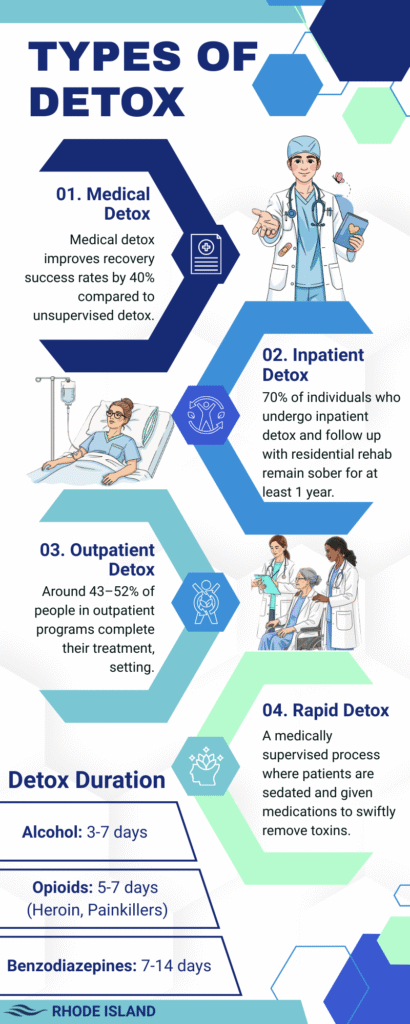
Detox focuses on the body first. It is the process of safely clearing substances while staff provide monitoring, comfort care, and support when symptoms change. This is often the right step when withdrawal could be risky or when you feel physically unwell.
Residential treatment focuses on the next phase. It supports recovery skills, structure, and daily stability after the body begins to settle. Many people move from detox into inpatient rehab or residential care after a clinical assessment, because treatment planning is about more than stopping—it is about building a life that supports recovery.
How Clinicians Decide The Right Level Of Care
We use a respectful evaluation process that looks at your substance use history, physical health risks, mental health needs, home support, and relapse risk. The goal is a safe match, not judgment, and we explain our recommendations in plain language.
This is where personalized care matters. We use risk screening and care coordination to decide whether you need detox first, residential care, or a step-down option, so you do not feel pushed into the wrong level of treatment.
Start Detox Or Residential Treatment In Rhode Island Today: First Call And Same-Day Steps
When you reach out, the first step is a confidential conversation. We ask a few practical questions, listen carefully, and then explain your options in a way that feels clear and steady. This confidential intake is designed to reduce stress, not add pressure.
If same-day care is available, we will guide you through the next steps right away. Our admissions support team can discuss timing, what to bring, and how arrival works. When 24/7 availability applies, we can also talk through what to do if you are calling after hours.
What To Expect In The First 24–72 Hours
The first days are about comfort and safety. We focus on rest, hydration, calm check-ins, and support that matches your symptoms. Withdrawal can feel different for every person, and that is why we monitor closely and adjust support as needed.
You can expect vital sign monitoring, possible medication support when clinically appropriate, and help with sleep stabilization. The goal is to help your body settle while you feel supported, informed, and treated with respect.
Start Detox Or Residential Treatment In Rhode Island Today: Detox Services In Rhode Island
Detox is a medically supported start to recovery. It helps you safely manage withdrawal symptoms from substances such as alcohol, opioids, benzodiazepines, and stimulants, while staff monitor your condition and respond quickly if risks appear.
At Rhode Island Addiction Treatment Center, detox is not presented as a “complete fix” by itself. For many people, it is the first step that prepares the mind and body for therapy and longer-term change. With medical detox, nursing care, and clear planning, detox becomes a safer bridge into the next stage of recovery.
Detox Comfort And Safety Supports
It is a painful process, so we provide supportive care to minimize discomfort and preserve dignity. That might involve ways to relieve your symptoms, get the nutrients you need, establish calming routines, and set up respectful limits that make you feel secure and grounded.
Given how rapidly needs change during withdrawal, we depend on frequent clinical check-ins and personalized comfort measures. The point is to ensure safe stabilization and steady communication so you understand what’s happening and why.
Residential Treatment In Rhode Island: What Daily Life Looks Like
Residential treatment gives you time away from daily triggers so you can focus on healing. Days are structured, and that structure reduces chaos, supports consistency, and builds confidence one day at a time. This is a key benefit of a structured schedule.
You will also be part of a supportive environment where you practice recovery skills alongside others. Through group support and guided routines, you build stability that carries into life after treatment. Over time, relapse prevention becomes practical because you rehearse it daily, not only talk about it.
Therapy And Recovery Skills You Will Practice
Residential-Therapeutic-Care has a hands-on, skill-based approach to therapy. You could do individual counseling to delve into triggers, stress patterns, and the reasons you began using substances as a coping tool. You can also participate in group discussions that focus on communication and promoting honesty.
If it is suitable, we can add family support as long as the boundaries are clear and consented to. You will also learn to cope with cravings and stress, such as thought-and-behavior techniques that enable you to pause, choose, and act more in control.
Support For Sleep, Stress, And Routine
It means much more than just stopping a substance. It is also about the recovery of daily life. This is why we encourage healthy habits – regular sleep and balanced meals, moving around, and setting realistic expectations for your return home.
For most people, as routines settle in, they feel more emotionally stable. However, when equipped with basic stress management tools and encouragement towards emotional wellness, decisions tend to fall into place. You start to develop a rhythm that reduces relapse and makes progress more sustainable.
Start Detox Or Residential Treatment in Rhode Island Today If Mental Health Is Involved
Many people face both addiction and mental health symptoms, such as anxiety, depression, trauma, or bipolar disorder. These concerns deserve careful attention, because untreated symptoms can increase cravings and raise relapse risk.
That is why we support dual diagnosis care when needed. This can include mental health support, coping skills, and a psychiatric evaluation when clinically appropriate. The goal is one coordinated plan, so you are not trying to heal one issue while the other stays untreated.
Paying For Treatment: Insurance And Other Options
Most people want cost clarity before they commit, and that is reasonable. We can help you understand insurance coverage and what benefits verification means, which is simply checking what your plan may cover and what steps are required.
We also explain costs and options in plain language before admission. If you have limited coverage or no insurance, ask us about available payment options. While options vary, we will be honest about what is possible and what next steps make sense.
What To Bring And How To Prepare
Preparing for treatment can reduce stress on day one. A simple packing checklist helps you arrive with what you need, without overthinking it. We also explain safety rules clearly, because some items may be restricted.
Bring:
- ID and insurance card (if you have one).
- A current medication list (name, dose, and schedule).
- Comfortable clothing and basic hygiene items.
- A small contact list for approved communication.
For safety, ask our team what items are not allowed, and follow our safety guidelines to make admission smoother.
 For a clear next step after understanding detox and residential care, read our latest blog, “Residential Rehab Program Near Warwick, Rhode Island,” to see what structured support can look like in daily life.
After Detox Or Residential: Planning The Next Step
Progress often continues after discharge, and that is a normal part of recovery. Instead of “graduation,” we focus on continuity, because the transition back to daily life can be a vulnerable window without support.
Strong aftercare planning may include outpatient support, step-down programs, peer groups, and practical relapse prevention planning. Some people also benefit from recovery coaching to stay accountable and supported while routines take hold.
Case Study (Real World Example)
In Illinois, researchers ran a randomized study after inpatient substance use treatment discharge. They assigned 150 people to either an Oxford House recovery home or “usual aftercare” like outpatient services or self-help groups.
At the 24-month follow-up, the Oxford House group had lower substance use (31.3% vs 64.8%), higher monthly income ($989.40 vs $440.00), and lower incarceration rates (3% vs 9%).
The study suggests that stable, abstinent housing and daily accountability can strengthen recovery after formal treatment ends. It is a clear reminder that structure matters, especially during early re-entry.
Why Choose Rhode Island Addiction Treatment Centers
We believe treatment should feel human, not harsh. Our team focuses on clear communication, steady support, and respectful care that protects privacy. With experienced clinicians and patient-centered care, we build a plan that fits your real needs.
We also take confidentiality seriously. With confidential treatment, we communicate with family only with your consent, and we support you with structure, dignity, and consistent guidance so you never feel lost in the process.
Start Detox Or Residential Treatment In Rhode Island Today
Recovery isn’t a simple progression, though it does begin with one clear decision. If alcohol or drug use is giving you less than it’s taking, then why keep that weight to yourself any longer?
At Rhode Island Addiction Treatment Centers, we take you through a safe detox, organized residential care and the life-saving next steps. Our team will listen without judging, explain your options in straightforward language and support you to make decisions about what feels safe and realistic for you.
You can ask questions, voice fears, and still be treated with respect. Are you ready to see what your life could look like if you had actual support in your corner?
Contact us today for a private conversation, inquire about same-day admission and let us help make this moment your defining moment.